SEO Tervola: The Complete Guide to Ranking Your Business on Google
What Is SEO Tervola?
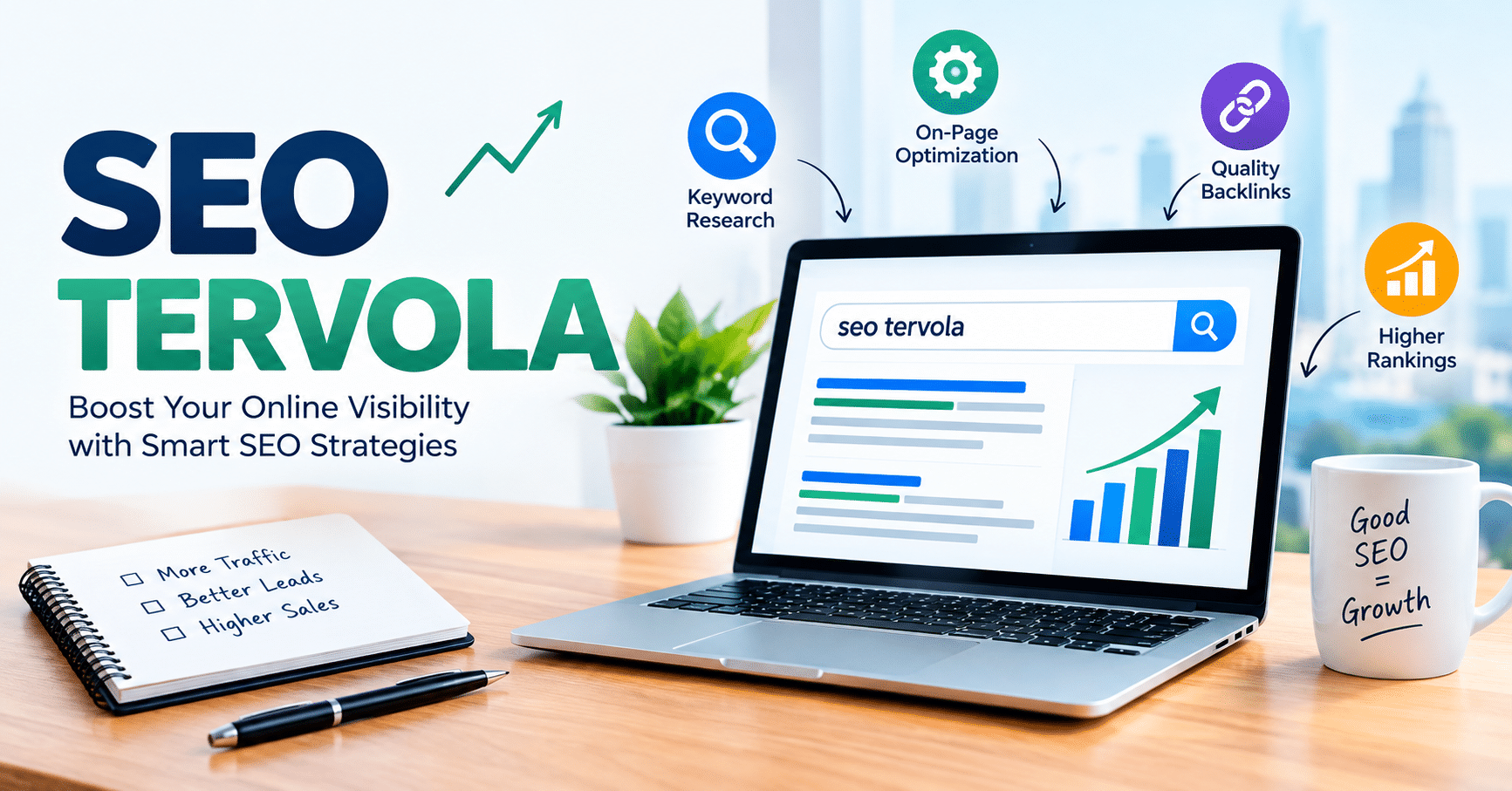
SEO Tervola means search engine optimization for businesses that serve customers in Tervola, Finland, or want to be found by people searching in and around the area. It combines local SEO, on-page optimization, technical fixes, helpful content and link building so your website appears on Google when nearby customers search for what you sell. Done well, it brings steady, high-intent organic traffic without paying for every click.
Explore Our Organic SEO Services
Table of Contents
- What SEO Means for a Business in Tervola
- Why Tervola Businesses Need SEO Today
- How Google Decides Who Ranks
- Local SEO for Tervola
- Keyword Research for Tervola
- On-Page SEO
- Technical SEO
- Content Strategy
- Link Building and Off-Page SEO
- How to Appear in Google AI Overviews
- E-Commerce SEO for Tervola Online Stores
- The Role of an SEO Audit
- Which Businesses Benefit Most
- Our SEO Process
- SEO Packages and Pricing
- How Long SEO Takes and How to Measure It
- Common SEO Mistakes to Avoid
- How to Choose an SEO Agency
- Frequently Asked Questions
- Final Thoughts
1. What SEO Means for a Business in Tervola
Search engine optimization is the practice of improving your website and online presence so search engines understand it, trust it and show it to people who are looking for your products or services. When a customer types a phrase into Google, the search engine scans billions of pages and chooses the few it believes are most helpful. SEO is how you earn a place among them.
For a business connected to Tervola, the goal is slightly different from a national brand. You are not trying to beat every company in the world. You are trying to be the obvious answer for a specific audience: residents of Tervola, people in the surrounding region of Finnish Lapland, travellers passing through, and customers who find you online and then order from you remotely.
That focus is an advantage. Smaller, more specific markets usually have less competition for the searches that matter most, which means a well-planned SEO strategy can reach the top results faster than it would in a crowded capital-city market.
SEO is not a trick or a single setting. It is a system made of several connected parts:
- On-page SEO – the content, titles, headings and structure of each page.
- Technical SEO – speed, mobile usability, crawlability and security.
- Local SEO – your Google Business Profile, local citations and reviews.
- Content marketing – articles, guides and service pages that answer real questions.
- Off-page SEO – backlinks and brand mentions from other trusted websites.
When these parts work together, search engines gain confidence in your site, and customers gain confidence in your business.
2. Why Tervola Businesses Need SEO Today
People no longer rely on printed directories or word of mouth alone. They search first. Whether someone needs a service provider, a place to stay, a local shop or a specialist supplier, the first step is usually a quick search on a phone.
Here is why that matters for you:
Customers decide before they call. Most buyers compare options online before contacting anyone. If your business does not appear, you are not even part of the comparison.
Mobile search is local by nature. Searches made on phones often carry local intent, such as services nearby or opening hours. Businesses that are well optimised for local search are shown to these ready-to-act users.
Organic traffic builds over time. Paid advertising stops the moment you stop paying. SEO, by contrast, builds an asset. Pages you optimise today can keep attracting visitors for months and years.
Trust is built in search results. Appearing on the first page, with strong reviews and clear information, signals credibility before the customer has even visited your site.
Competitors are already investing. Even in smaller markets, businesses that take SEO seriously gradually take the visibility that others leave behind.
If your website is simply “there” but not optimised, you are probably invisible for the very searches that would bring you customers.
3. How Google Decides Who Ranks
Google does not publish its full ranking formula, but its public guidance and years of industry testing point to several consistent themes.
Relevance. Does your page match what the person is searching for? This is judged by your content, headings, page titles and the way your site is structured around a topic.
Quality and helpfulness. Google rewards content that is original, accurate and written to help people rather than to manipulate rankings. Experience, expertise, authoritativeness and trustworthiness (often shortened to E-E-A-T) guide how quality is evaluated.
Authority. Links from reputable websites and mentions across the web act as endorsements. A site with strong, relevant backlinks is treated as more trustworthy.
User experience. Fast loading, mobile-friendly design, safe browsing (HTTPS) and easy navigation all contribute to better performance. Google’s Core Web Vitals measure aspects of loading speed, interactivity and visual stability.
Location and context. For local searches, Google also considers how close a business is to the searcher, how well the business profile matches the query and how prominent the business is online.
Understanding these factors helps you see why SEO is both a technical and a human discipline. You are optimising for machines, but you are writing and designing for people.
4. Local SEO for Tervola
Local SEO is the part of optimisation designed to make your business visible to nearby customers. For anyone targeting Tervola, it is often the highest-return starting point.
Claim and Optimise Your Google Business Profile
Your Google Business Profile (GBP) is the information panel that appears in Google Search and Google Maps. To make it work for you:
- Claim and verify the profile.
- Use your exact business name, address and phone number.
- Choose a precise primary category and relevant secondary categories.
- Write a clear business description that explains what you do and who you serve.
- List services or products, opening hours and special hours for holidays.
- Add high-quality photos of your premises, team and work.
- Publish regular updates and respond to questions.
A complete, active profile is far more likely to appear in the local results that appear near the top of the page.
Keep Your NAP Consistent
NAP stands for Name, Address and Phone number. Search engines compare your details across your website, directories and social profiles. If they conflict, trust drops. Make sure your details are written identically everywhere, including abbreviations and formatting.
Build Local Citations
Citations are mentions of your business on other websites, such as business directories, chamber listings and industry pages. Accurate listings on reputable directories reinforce your location and legitimacy. Remove duplicates and fix outdated entries, because inconsistent data confuses both search engines and customers.
Collect and Manage Reviews
Reviews influence both rankings and conversions. Ask satisfied customers to leave honest feedback, reply to every review professionally, and handle criticism calmly. Never buy or fake reviews; doing so violates platform rules and can lead to penalties.
Create Location-Focused Pages
If you serve Tervola and neighbouring areas, create genuine, helpful pages for each place you serve. Avoid thin pages with only the town name swapped out. Each page should include real details: the services you offer there, examples of work, answers to local questions and clear contact options.
Our dedicated Local SEO services cover Google Business Profile optimisation, citation building, review management and Google Maps visibility.
5. Keyword Research for Tervola
Keyword research is the foundation of every SEO campaign. It tells you what words and phrases your customers actually use, so you can build pages around them.
Types of Keywords to Target
Local keywords combine a service with a place, for example “seo tervola“. These capture people with a clear geographic need.
Service keywords describe what you offer without a location. They help you rank beyond your immediate area.
Question keywords are phrases beginning with how, what, why, when or where. They are valuable for informational content and for appearing in AI-generated answers.
Long-tail keywords are longer, more specific phrases such as “how to improve local search ranking for a small business”. They have lower volume but higher intent and are easier to win.
Think About Language
Finland is a multilingual market. Many searches are made in Finnish, and many people also search in English or Swedish. The Finnish term for search engine optimisation, hakukoneoptimointi, is commonly used alongside the English abbreviation SEO. A strong strategy researches which language and which spelling variants your audience actually uses, and then builds content that matches. Finnish is also a heavily inflected language, so the same word can appear in several forms. Good keyword research accounts for these variations rather than relying on one exact phrase.
Match Keywords to Search Intent
Every keyword has an intent behind it:
- Informational – the person wants to learn something.
- Navigational – the person wants to reach a specific site.
- Commercial – the person is comparing options.
- Transactional – the person is ready to buy or book.
Your page should match the intent. A guide will not rank for a buying query, and a sales page will not rank for a learning query. Mapping each keyword to the right type of page is one of the most important steps in SEO.
Avoid Keyword Cannibalisation
If several pages compete for the same phrase, they weaken each other. Assign one primary keyword to one primary page, and use supporting pages to cover related subtopics and link back to the main page.
6. On-Page SEO
On-page SEO covers everything you can control directly on your own pages. It is where most quick wins come from.
Title Tags
Your title tag is the clickable headline in search results. Keep it concise, place your main keyword near the start, and make it compelling enough to earn a click. Every page should have a unique title.
Meta Descriptions
A meta description does not directly decide rankings, but it influences whether people click. Write a clear summary that includes the benefit, a natural mention of the keyword and a gentle call to action.
Headings
Use a single H1 that states the main topic. Use H2 and H3 headings to organise sub-topics logically. Clear structure helps readers scan and helps search engines understand the page.
Content Quality
Write for real people. Answer questions completely, use plain language and include specific details such as processes, examples and outcomes. Avoid filler. Content that genuinely helps tends to earn links, shares and repeat visits.
Internal Linking
Internal links connect pages on your site. They help visitors find related information and help search engines discover and understand your content. Use descriptive link text and make sure every link points to a working page.
Image Optimisation
Compress images so pages load quickly, use descriptive file names and write helpful alt text. Alt text improves accessibility and gives search engines context.
URL Structure
Short, readable URLs that include the topic are easier to understand and share. Avoid unnecessary parameters and keep your structure consistent.
Structured Data
Schema markup helps search engines interpret your content, for example identifying your business, services, reviews or FAQs. Implemented correctly, it can make your listings eligible for enhanced results.
7. Technical SEO
Technical SEO ensures that search engines can crawl, index and render your website without obstacles. Even excellent content will underperform on a technically weak site.
Site Speed and Core Web Vitals
Slow pages frustrate users and weaken performance. Improve speed by compressing images, minimising unnecessary scripts, using efficient hosting, enabling caching and loading resources sensibly.
Mobile Friendliness
Google primarily uses the mobile version of a site for indexing. Your pages must be readable, tappable and fast on small screens. Test regularly on real devices.
Crawlability and Indexing
Use a clean XML sitemap, a sensible robots.txt file and consistent canonical tags. Check Google Search Console for indexing errors, and make sure important pages are not accidentally blocked.
HTTPS and Security
A secure connection is a basic expectation. Make sure your site uses HTTPS and that all resources load securely.
Fixing Broken Links and Redirects
Broken links harm user experience and waste crawl resources. Audit your site regularly, update or remove dead links, and use proper 301 redirects when pages move. Redirect chains slow things down, so point old URLs directly to the final destination.
Duplicate Content
Duplicate or near-duplicate pages dilute your signals. Consolidate them, use canonical tags where appropriate, and ensure each page has a clear purpose.
International and Language Setup
If your site serves multiple languages, use clear language versions and appropriate language annotations so the right version is shown to the right audience.
8. Content Strategy
Content is how you earn visibility for a wide range of searches beyond your core service pages.
Build Topic Clusters
Instead of publishing disconnected posts, organise content into clusters. A central pillar page covers a broad topic in depth, and supporting articles explore subtopics and link back to the pillar. This structure demonstrates expertise and makes your site easier to navigate.
Answer Real Customer Questions
Listen to the questions customers ask on the phone, by email and in person. Turn them into articles, FAQs and guides. This kind of content is naturally helpful and often matches the question-style searches that trigger rich results.
Show Experience
Case studies, before-and-after examples, process explanations and honest advice show first-hand experience. These signals support quality evaluation and persuade potential customers.
Keep Content Fresh
Review your key pages regularly. Update facts, add new information and remove outdated material. Fresh, accurate content is more useful to readers and easier for search engines to trust.
Use Multiple Formats
Mix text with images, tables, checklists and short videos where they genuinely help. Variety keeps readers engaged and can earn visibility in more places.
9. Link Building and Off-Page SEO
Backlinks remain one of the strongest signals of authority. The key is quality and relevance, not volume.
Earn Links the Right Way
- Publish useful resources others want to reference.
- Contribute genuine expertise to relevant publications and communities.
- Build relationships with local organisations, suppliers and partners.
- Get listed in respected industry and regional directories.
- Share original data, guides or tools that deserve citation.
Avoid Risky Tactics
Buying links in bulk, using automated link schemes or building links on irrelevant spammy sites can lead to penalties. Sustainable results come from natural, relevant endorsements.
Brand Mentions and Digital PR
Even unlinked mentions help build recognition. Local news coverage, community sponsorships and partnerships can all contribute to a stronger, more trusted brand presence.
10. How to Appear in Google AI Overviews
Search is changing. Google increasingly shows AI-generated summaries at the top of results for many queries, and people also use AI assistants to research businesses. While no one can guarantee inclusion, you can make your content easier for these systems to understand and cite.
Lead With Direct Answers
Place a clear, concise answer near the top of the page, then expand with detail below. This pattern, a short definition followed by depth, matches how summaries are assembled.
Use Question-Based Headings
Phrase headings the way people ask questions. Follow each with a direct answer in the first sentence or two, then supporting explanation.
Structure Information Clearly
Use short paragraphs, descriptive subheadings, lists for steps or options and tables for comparisons. Clean structure makes your content easier to extract and quote.
Be Accurate and Specific
Vague claims are unlikely to be used. Provide precise, verifiable information, name your sources where appropriate, and avoid exaggeration.
Demonstrate Expertise and Trust
Include author information, clear contact details, genuine reviews and transparent business information. These signals support the quality that AI-driven results favour.
Strengthen Your Entity
Make sure your business is described consistently across your website, Google Business Profile, directories and social profiles. Consistent entity information helps systems recognise who you are and what you do.
Keep Technical Foundations Healthy
A page cannot be cited if it cannot be crawled or rendered. Ensure fast loading, clean code, working links and proper indexing.
Optimising for AI Overviews is not a separate discipline from good SEO. It is good SEO, presented with extra clarity.
11. E-Commerce SEO for Tervola Online Stores
Many local businesses now sell online, whether they are shipping products across Finland or serving customers abroad. E-commerce SEO adds a few specialised layers.
Optimise category pages. Category pages often target the broadest, most valuable keywords. Give them unique descriptive text, clear navigation and helpful filters.
Write unique product descriptions. Copying manufacturer text creates duplicate content. Describe benefits, specifications, use cases and sizing in your own words.
Use product schema. Structured data for price, availability and reviews can make listings more informative in search.
Handle variations carefully. Colour and size variations should not create large numbers of near-identical indexable pages.
Improve speed and checkout. Fast pages and a smooth checkout improve both rankings and conversions.
Create buying guides. Educational content helps shoppers compare options and brings in visitors earlier in the decision process.
Our E-Commerce SEO services support Shopify, WooCommerce, Magento, BigCommerce and custom-built stores with audits, keyword research, technical fixes and ongoing reporting.
Discover E-Commerce SEO Services
12. The Role of an SEO Audit
Before you invest in growth, you need to understand your starting point. An SEO audit is a structured health check of your website that reveals what is helping, what is hurting and what is missing.
A thorough audit typically reviews:
- Technical health – crawl errors, indexing, redirects, broken links and security.
- Performance – page speed, mobile usability and Core Web Vitals.
- On-page quality – titles, descriptions, headings, content depth and internal links.
- Backlink profile – the quality and relevance of sites linking to you.
- Local presence – Google Business Profile, citations and review signals.
- Competitor comparison – where rivals are ahead and where gaps exist.
The result should be a prioritised action plan with practical tasks, not a long report full of jargon. You can run an audit once to fix an immediate problem, but repeating it regularly keeps your site healthy as it grows.
13. Which Businesses Benefit Most
Almost any business that depends on being found online can benefit from SEO. In a community like Tervola and the wider Lapland region, strong candidates include:
- Local service providers and trades that rely on nearby customers.
- Accommodation, hospitality and tourism businesses that attract visitors planning ahead online.
- Restaurants, cafés and retail shops that want more foot traffic and calls.
- Professional services such as consultants, accountants and clinics.
- Producers and manufacturers that sell to customers beyond the local area.
- Online stores that need national or international visibility.
- Start-ups and new brands that need to build awareness from zero.
If your customers search before they buy, SEO belongs in your marketing mix.
14. Our SEO Process
At Business Grow, we follow a transparent, step-by-step approach so you always know what is happening and why.
Step 1: Discovery and goals. We learn about your business, your customers and your targets. We define what success looks like in leads, sales or calls, not just rankings.
Step 2: Research and analysis. We study your market, competitors and audience. We identify the keywords, content gaps and technical issues that matter most.
Step 3: Strategy and presentation. We present findings and a tailored plan, gather your feedback and refine the approach together.
Step 4: Implementation. We carry out on-page improvements, technical fixes, content creation and link building according to the agreed priorities.
Step 5: Monitoring and reporting. We track rankings, traffic, conversions and local visibility, and share clear reports that explain what the numbers mean.
Step 6: Continuous improvement. Search is always evolving. We keep testing, learning and refining so gains compound over time.
Learn More About Our Organic SEO Approach
15. SEO Packages and Pricing
We offer flexible monthly SEO packages so you can start at a level that suits your goals and scale as results grow.
| Plan | Price | What’s Included |
|---|---|---|
| Starter | $399 per month | Up to 15 keywords targeted, basic on-page optimisation, basic technical SEO, 1 blog topic per month |
| Bronze | $599 per month | Up to 30 keywords targeted, strong on-page optimisation, technical SEO fixes, 2 blog topics per month |
| Golden | $799 per month | 50 to 100 keywords targeted, full advanced on-page optimisation, full site audit and indexing optimisation, content calendar and blog guidance |
Prices and inclusions may change, so please confirm the latest details on our pricing page before you decide.
16. How Long SEO Takes and How to Measure It
Realistic Timelines
SEO is a long-term investment. Technical fixes and small on-page improvements can show early movement within weeks. Meaningful ranking gains for competitive terms usually take several months, and the strongest results often build over six to twelve months or more. The timeline depends on your starting point, competition, content quality and consistency of effort. Be cautious of anyone promising guaranteed first-place rankings or instant results.
The Metrics That Matter
Track outcomes that connect to your business, not just vanity numbers:
- Organic traffic – how many visitors arrive from search.
- Keyword rankings – positions for your priority terms, tracked over time.
- Local visibility – profile views, calls, direction requests and map rankings.
- Conversions – form submissions, calls, bookings and sales from organic visits.
- Click-through rate – how often people choose your listing.
- Engagement – time on page, pages per visit and bounce behaviour.
- Backlink growth – new, relevant referring domains.
Tools You Should Use
Google Search Console shows how your site appears in search and highlights technical issues. Google Analytics shows how visitors behave. Your Google Business Profile insights show local performance. Together they give a clear picture of progress.
17. Common SEO Mistakes to Avoid
Ignoring local signals. Skipping your Google Business Profile or letting your details become inconsistent costs you easy visibility.
Stuffing keywords. Repeating a phrase unnaturally makes content worse and can hurt performance. Write naturally and let relevant terms appear where they belong.
Publishing thin or copied content. Pages with little value, or text copied from elsewhere, rarely rank well.
Neglecting mobile users. A site that is awkward on a phone loses both rankings and customers.
Leaving broken links and errors. Dead links and crawl errors signal neglect and frustrate visitors.
Chasing shortcuts. Cheap link packages, automated content and other shortcuts may create short-term spikes followed by long-term damage.
Not tracking results. Without measurement, you cannot tell what works.
Stopping too soon. SEO compounds. Many businesses quit just before results begin to appear.
18. How to Choose an SEO Agency
If you decide to work with a partner, look for these qualities:
- Transparency. They explain what they will do, why and how they will report progress.
- Realistic promises. They do not guarantee specific rankings or timelines.
- Relevant experience. They understand local, e-commerce and service-based SEO and can show examples.
- White-hat methods. They follow search engine guidelines and avoid risky shortcuts.
- Clear communication. You can reach them easily and understand their reports.
- Tailored strategy. They build a plan around your goals, not a generic template.
Ask questions, request examples of past work and make sure you understand what is included in the price.
19. Frequently Asked Questions
What is SEO Tervola?
SEO Tervola refers to optimising a website and online presence so that it ranks well in search results for people in and around Tervola, Finland. It typically combines local SEO, on-page work, technical improvements, content and link building.
Why is local SEO important for businesses in Tervola?
Local SEO helps nearby customers find you at the exact moment they need your service. It improves visibility in Google Maps and local results, increases calls and visits, and builds trust through accurate information and reviews.
How long does SEO take to work?
Some improvements appear within weeks, but meaningful, lasting growth usually takes several months. Results depend on competition, your starting position and the consistency of the work.
Is SEO better than paid advertising?
They serve different purposes. Paid ads deliver immediate visibility but stop when the budget ends. SEO builds long-term organic visibility and often lowers the cost of acquiring customers over time. Many businesses use both.
Do I need a Google Business Profile?
If you serve customers in a specific area, yes. It is one of the most important local ranking assets and often the first thing customers see.
Can SEO help me appear in Google AI Overviews?
No one can guarantee inclusion, but clear structure, direct answers, accurate information, strong expertise signals and healthy technical foundations make your content more likely to be understood and cited.
Should I write my content in Finnish or English?
It depends on your customers. Research which language they search in. Many businesses benefit from offering content in more than one language, with each version written naturally rather than machine-translated.
How much does SEO cost?
Cost varies with scope and competition. Our monthly plans start at $399 for the Starter package and go up to $799 for the Golden package. See our pricing page for current details.
What access do you need to start an SEO project?
Read-only access to analytics and Search Console is usually helpful. Temporary access to your website’s content management system may be requested to validate or implement changes.
Can you help with e-commerce SEO?
Yes. We optimise category pages, product pages, technical structure, content and links for online stores built on major platforms and custom systems.
How do I know if my SEO is working?
Track organic traffic, keyword rankings, local profile actions and conversions over time. A good partner will provide clear reports linking activity to business results.
What is the first step?
Start with an SEO audit. It shows where you stand today and gives you a prioritised plan for what to fix first.
20. Final Thoughts
Ranking well for SEO Tervola and related searches is not about secret tricks. It is about showing search engines and customers that your business is relevant, trustworthy and genuinely helpful. That means a technically sound website, accurate local information, content that answers real questions, and a steady flow of quality endorsements from across the web.
The businesses that win in search are the ones that treat SEO as an ongoing process rather than a one-time task. They measure results, adapt to change and keep improving. Starting now gives you a head start over competitors who wait.
If you want a clear plan, honest guidance and a team that explains every step, Business Grow is ready to help.
Get Started with Organic SEO Services
Explore Our Related Services
Strengthen your online presence with more services from Business Grow:
- Organic SEO Services – long-term rankings and sustainable organic growth.
- Local SEO Services – Google Maps, Business Profile and citation optimisation.
- E-Commerce SEO Services – rank products and categories and grow online sales.
- SEO Audit Services – a complete website health check with an action plan.
- Digital Marketing Services – Google Ads, Facebook Ads and social media marketing.
- Pricing and Packages – compare plans and choose what fits.
- Contact Business Grow – talk to our team about your goals.