AI SEO Services: The Complete 2026 Guide to Ranking in Google AI Overviews & Organic Search
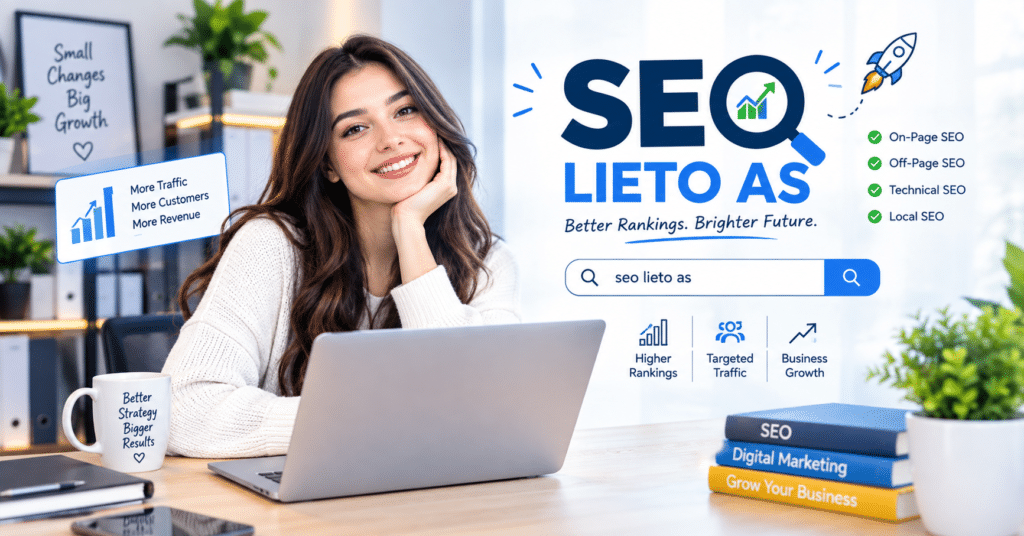
seo koski tl for almost two decades, ranking on Google meant one thing: get your link into the top ten blue links. That world is disappearing fast. Google now answers a huge share of queries directly inside AI Overviews — AI-generated summaries that sit above the traditional search results and pull information from multiple sources at once. Add in AI-powered discovery through ChatGPT, Perplexity, Google Gemini, and voice assistants, and it’s clear that “getting found online” no longer depends only on ranking a webpage — it depends on whether an AI system trusts your content enough to quote it.
This is where AI SEO services come in. AI SEO (sometimes called Generative Engine Optimization or GEO) is the practice of structuring, writing, and technically optimizing your website so that both traditional search engines and AI answer engines can understand, trust, and surface your content. It builds on everything that already works in classic SEO — technical health, backlinks, on-page relevance — but adds a new layer focused on how large language models extract, summarize, and cite information.
If your business depends on being found online, this guide will walk you through exactly what AI SEO is, why Google AI Overviews matter, how the ranking signals actually work, and the practical steps you can take today to get your brand mentioned in AI-generated answers. Along the way, we’ll show you how a full-service digital agency like Business Grow blends AI search optimization with proven organic SEO services to future-proof your visibility.
What Is AI SEO?
AI SEO is the set of strategies used to optimize a website so it performs well in AI-driven search experiences — including Google’s AI Overviews, AI Mode, featured snippets, and third-party AI assistants that browse the web to answer user questions.
Unlike traditional SEO, which optimizes primarily for ranking position in a list of links, AI SEO optimizes for extractability — how easily an AI model can pull a clear, accurate, well-supported answer out of your content and present it (often with a citation link back to your site) inside a conversational response.
The core pillars of AI SEO include:
- Semantic clarity – writing content that directly and unambiguously answers a specific question.
- Structured formatting – using headers, lists, tables, and FAQ blocks that AI systems can parse easily.
- E-E-A-T signals – demonstrating Experience, Expertise, Authoritativeness, and Trustworthiness so the AI model has confidence in your source.
- Technical accessibility – making sure crawlers (including AI crawlers) can actually read and index your pages.
- Topical authority – covering a subject in depth across multiple connected pages rather than a single shallow post.
- Structured data (schema markup) – giving machines explicit, unambiguous facts about your content.
In short: AI SEO is what happens when classic SEO fundamentals meet the way large language models read the web.
Why Google AI Overviews Matter for Every Business in 2026
Google AI Overviews now appear for a very large share of informational and commercial search queries. When a searcher gets their answer directly on the results page, they may never click through to a website at all — a phenomenon commonly called a zero-click search. This has two major implications for business owners:
- Visibility is shifting from “ranking #1” to “being the cited source.” Even if your page isn’t the top blue link, being quoted or linked inside an AI Overview can drive high-intent traffic and brand recognition.
- Being left out of AI Overviews means being invisible to a growing share of searchers. As more users trust AI-generated summaries, businesses that aren’t structured for AI extraction risk losing visibility even if their traditional rankings stay stable.
For small and mid-sized businesses competing against larger brands, this is actually an opportunity. Google’s AI systems don’t just reward domain size — they reward clarity, structure, and trustworthy sourcing. A well-optimized local business page can be cited in an AI Overview ahead of a much larger competitor if it answers the query more precisely.
This is exactly why more businesses are pairing traditional SEO services with a dedicated AI search optimization layer — the two strategies reinforce each other rather than compete.
How Google AI Overviews Actually Choose Content
Google hasn’t published an exact algorithm for AI Overviews, but based on observed patterns and Google’s own public guidance on Search quality, several factors consistently correlate with AI citation:
Direct, Extractable Answers
Pages that answer a question in the first 1–3 sentences of a section — before adding supporting detail — are far more likely to be pulled into an AI summary. AI models favor content that doesn’t bury the answer under long preambles.
Strong Topical Depth
A single blog post rarely outranks a well-built content cluster — a pillar page supported by several related, internally linked pages that thoroughly cover a topic from multiple angles. This is why internal linking between related service pages (like SEO, web design, and digital marketing) strengthens the entire cluster’s authority.
E-E-A-T Signals
Google’s quality guidelines emphasize Experience, Expertise, Authoritativeness, and Trustworthiness. Author bios, case studies, verifiable business information (address, phone number, years in operation), and original data all strengthen these signals.
Technical Health
If a page loads slowly, isn’t mobile-friendly, or has crawl errors, it becomes far less likely to be indexed properly — let alone cited by an AI system. Core Web Vitals, clean HTML structure, and proper canonical tags all matter.
Structured Data (Schema Markup)
FAQ schema, Article schema, LocalBusiness schema, and Organization schema all give search engines and AI crawlers unambiguous facts about your content, making it easier for them to trust and reuse.
Freshness and Accuracy
AI systems are trained to avoid outdated or contradictory information. Regularly updated content — with visible “last updated” dates — signals ongoing accuracy and relevance.
Backlinks and Brand Mentions
Off-page signals still matter enormously. A site that is mentioned and linked to by other reputable sources sends a strong trust signal to both traditional ranking algorithms and AI summarization systems.
AI SEO Framework
Here’s a practical framework you can apply to any website, whether you manage it in-house or work with an agency offering full organic SEO services.
Step 1: Keyword & Query Research for AI Search
Traditional keyword research focused on search volume and competition. AI SEO keyword research also considers question-based queries (“what is,” “how do I,” “best way to”) and comparison queries (“X vs Y”), since these are the query types AI Overviews answer most often. Tools like Google Search Console’s query reports, AlsoAsked, and AnswerThePublic help surface these question patterns.
Step 2: Build Topic Clusters, Not Isolated Pages
Group related content under a central pillar page. For example, an SEO agency might build a cluster around “SEO Services” with supporting pages on SEO audits, local SEO, and e-commerce SEO — all interlinked to demonstrate topical authority.
Step 3: Write for Extractability
Structure every important section with:
- A clear H2 or H3 question as the heading.
- A direct answer in the first sentence or two.
- Supporting detail, examples, or data afterward.
- Bullet points or numbered lists wherever a process or comparison is described.
Step 4: Add Structured Data
Implement FAQ schema on question-and-answer sections, Article schema on blog content, and Organization/LocalBusiness schema sitewide. This doesn’t guarantee an AI citation, but it removes ambiguity that could cause your content to be skipped.
Step 5: Strengthen E-E-A-T
Include real author names and credentials, client testimonials, case studies with measurable results, and transparent business information. If your agency has delivered results — like ranking clients on page one — showcase that data explicitly rather than vaguely.
Step 6: Fix Technical SEO Foundations
AI Overviews and traditional rankings both depend on a technically sound site: fast load times, mobile responsiveness, clean URL structures, proper indexing, and no broken links. A technical audit should always be step one, not an afterthought — this is exactly what a professional SEO audit is designed to catch.
Step 7: Earn Authoritative Backlinks
Off-page SEO — guest posts, digital PR, partnerships, and citations — remains one of the strongest trust signals search engines use, AI-driven or not. A site with a healthy, natural backlink profile is far more likely to be treated as a trustworthy source by AI summarization systems.
How to Measure AI SEO Success: The KPIs That Actually Matter
Because AI Overviews often satisfy a search without a click, traditional metrics like keyword rank alone no longer tell the full story. To measure whether your AI SEO strategy is working, track a broader set of indicators:
- Impressions and average position in Google Search Console, especially for question-based queries, even when click-through rate looks lower than expected.
- Brand mention tracking — monitoring whether your business name, product, or domain appears inside AI Overviews or AI assistant answers, even without a direct click.
- Referral traffic from AI platforms — tools like ChatGPT, Perplexity, and Gemini increasingly send traffic that shows up as referral or direct visits; segment this in your analytics where possible.
- Featured snippet and “People Also Ask” appearances, which often correlate closely with AI Overview eligibility.
- Indexation health — the percentage of your important pages that are indexed cleanly, with no crawl errors or duplicate content issues.
- Time-to-index for new content, since AI systems favor fresh, recently verified information.
- Conversion rate from organic and AI-referred traffic, to confirm that visibility gains are translating into real business results, not just vanity impressions.
A good agency reporting process should combine these signals into a single monthly view, rather than reporting keyword rankings in isolation.
Content Freshness: The Overlooked AI SEO Advantage
One of the most underused AI SEO tactics is a disciplined content refresh schedule. Language models and Google’s ranking systems both place a premium on information that is current, especially for topics involving pricing, statistics, regulations, or fast-moving industries like technology and marketing.
A practical freshness workflow looks like this:
- Audit existing content quarterly to flag outdated statistics, dead links, or superseded best practices.
- Update the “last modified” date visibly on the page whenever meaningful changes are made — not just for cosmetic edits.
- Add new sections rather than only editing existing ones, since expanding depth signals ongoing investment in the topic.
- Re-submit updated URLs through Google Search Console to encourage faster re-crawling.
- Monitor ranking and citation changes after each refresh to learn which types of updates move the needle most for your industry.
Businesses that treat their best-performing pages as living documents — rather than one-and-done blog posts — consistently outperform competitors who publish once and never return.
Voice Search and Conversational Queries
AI Overviews share a lot of DNA with voice search results, since both are built to answer natural, conversational questions rather than short keyword fragments. Optimizing for one tends to strengthen the other. Key tactics include:
- Writing content that mirrors how people actually speak, not just how they type (“What’s the best way to improve my local rankings?” rather than just “local rankings improve”).
- Targeting long-tail, question-based phrases with lower competition but high intent.
- Ensuring your Google Business Profile is fully completed and accurate, since voice assistants and AI Overviews both draw heavily from verified local business data for location-based queries.
- Using natural, conversational language in FAQ sections rather than terse, keyword-stuffed answers.
A Practical AI SEO Checklist
Use this checklist as a quick reference when auditing any page for AI search readiness:
- Does the page directly answer a specific question within the first 1–3 sentences of its main section?
- Are headings phrased as natural questions where appropriate?
- Is FAQ schema implemented on question-and-answer content?
- Is the page part of a connected topic cluster with relevant internal links?
- Does the page include original data, case studies, or clear expertise signals?
- Is the “last updated” date visible and accurate?
- Does the page load quickly and pass Core Web Vitals on mobile?
- Are all internal and outbound links verified and working, with no broken links?
- Is the business’s name, address, and phone number consistent across the site and external listings?
- Does the content avoid keyword stuffing and read naturally?
Running through this list across your most important pages is one of the fastest ways to identify quick AI SEO wins before committing to a larger content overhaul.
Real-World Example: What AI-Ready Content Looks Like in Practice
Imagine two competing local service businesses. Business A publishes a 400-word page that vaguely describes “our great services” with no direct answers to common customer questions. Business B publishes a page structured around the exact questions customers search for — “How much does [service] cost?”, “How long does [service] take?”, “What areas do you serve?” — each answered clearly in the first sentence, backed by FAQ schema, and linked to related service and pricing pages.
When an AI Overview is generated for a related search, Business B’s page is far more likely to be extracted and cited, simply because the structure removes ambiguity. This isn’t about writing more content — it’s about writing clearer, more directly useful content and organizing it so machines can process it as easily as humans can.
AI SEO vs. Traditional SEO: What’s the Real Difference?
| Factor | Traditional SEO | AI SEO (GEO) |
|---|---|---|
| Primary goal | Rank in top 10 blue links | Get cited/quoted in AI-generated answers |
| Content format | Long-form, keyword-optimized | Direct-answer blocks + long-form depth |
| Success metric | Ranking position, CTR | Citation frequency, brand mentions, referral traffic |
| Structure | Headers, keywords | Headers, schema, FAQ blocks, structured data |
| Trust signals | Backlinks, domain authority | Backlinks + E-E-A-T + verifiable facts |
| Update cadence | Periodic refresh | Frequent freshness updates |
The good news: none of this replaces traditional SEO — it extends it. A business that already invests in solid on-page, off-page, and technical SEO is already 70% of the way toward being AI-search-ready.
Common AI SEO Mistakes Businesses Make
- Ignoring question-based content. If your pages never directly answer “what,” “how,” or “why” questions, AI systems have nothing clean to extract.
- Overstuffing keywords instead of writing naturally. AI models are trained to detect and downrank unnatural, keyword-stuffed text.
- No internal linking strategy. Isolated pages with no connection to related services or content weaken topical authority.
- Skipping schema markup. This is one of the easiest, highest-leverage technical wins many sites still miss.
- Publishing once and never updating. Stale statistics and outdated claims reduce trust signals over time.
- Broken or dead internal links. Every broken link is a dead end for both users and crawlers, and it actively damages crawl efficiency and trust signals sitewide.
- Treating AI SEO as separate from core SEO. The two should be planned together, not bolted on as an afterthought.
How Organic SEO Services Support AI Search Visibility
A dedicated organic SEO services program lays the exact groundwork AI search optimization depends on. Organic SEO typically covers four connected pillars:
- On-Page SEO — optimizing content, headings, and HTML structure so both users and search engines understand page relevance.
- Off-Page SEO — building backlinks, brand mentions, and external trust signals that boost domain authority.
- Technical SEO — ensuring your site is fast, crawlable, secure, and free of indexing errors.
- Local SEO — optimizing for geographic search intent, Google Business Profile accuracy, and “near me” queries.
Because AI Overviews draw heavily on well-structured, technically sound, high-authority pages, strengthening these four pillars is the single most effective way to improve your odds of being cited by AI search systems — while also improving your traditional rankings at the same time.
Explore Our Organic SEO Services
Building a Complete Digital Presence Around AI SEO
AI SEO doesn’t operate in isolation. Search engines and AI models also factor in overall site quality, design, and user experience when deciding which sources to trust. That means your broader digital presence — website design, branding, and marketing — directly supports your search visibility.
A Fast, Modern Website Foundation
AI Overviews and Core Web Vitals both reward well-built websites. A slow, outdated, or poorly structured site undermines even the best content strategy.
See Our Web Design & Development Services
E-Commerce Sites Need Specialized SEO
Product pages, category structures, and shopping-intent queries all behave differently in AI search than blog content does. E-commerce brands need optimization built specifically around product schema, reviews, and purchase-intent keywords.
Explore E-Commerce SEO Services
Local Businesses Need Local SEO
“Near me” and location-based queries are among the most common triggers for AI Overviews and Google’s Local Pack. If your business serves a specific city or region, local optimization is non-negotiable.
Strong Branding Builds Trust Signals
E-E-A-T isn’t just about content — a consistent, professional brand identity (logo, visual design, messaging) reinforces trustworthiness signals to both users and search algorithms.
View Brand & Identity Design Services
Paid & Social Channels Amplify Organic Signals
Brand mentions and traffic from social and paid channels contribute to the broader authority signals AI systems weigh when evaluating trustworthiness.
Explore Digital Marketing Services
A Full Technical Audit Is the Starting Point
Before investing in new content or AI optimization, it’s essential to know exactly where your site currently stands — its crawl errors, speed issues, and missed schema opportunities.
Why Choose Business Grow for AI & Organic SEO Services
Business Grow is a full-service digital growth agency based in Dhaka, Bangladesh, serving clients internationally since 2022. Rather than treating SEO, design, and marketing as separate services, the agency builds them together — because search visibility in the AI era depends on all three working in sync.
What sets a combined approach apart:
- Full-funnel expertise — SEO, web design, branding, and paid marketing under one roof, so your technical foundation, content, and brand trust signals are aligned rather than fragmented across vendors.
- Transparent reporting — Clients receive clear visibility into keyword performance, technical fixes, and content published, rather than vague monthly summaries.
- Scalable SEO plans — From a Starter plan targeting up to 15 keywords to a Golden plan covering 50–100 keywords with full technical audits and content calendars, businesses of every size can find a fitting starting point.
- Fast turnaround — With a “website live in 3 days” delivery standard for design projects and ongoing 24/7 support, momentum isn’t lost waiting on deliverables.
- Global client base — Serving businesses across the USA, Canada, UK, and Bangladesh, with strategies adapted to different markets and search behaviors.
Industries That Benefit Most From Combined AI + Organic SEO
While every industry benefits from stronger search visibility, some sectors see especially fast returns when AI SEO and organic SEO are implemented together:
- E-commerce brands, where product and category pages compete directly against marketplaces in both traditional results and AI shopping summaries.
- Local service businesses (contractors, clinics, salons, agencies), where “near me” and question-based local queries are increasingly answered directly by AI Overviews.
- Professional services (legal, financial, consulting), where E-E-A-T signals and trustworthy, well-sourced content directly influence which firms get cited as authoritative answers.
- B2B and SaaS companies, where detailed, comparison-style content (“X vs Y”, “best tools for Z”) aligns closely with the exact query types AI Overviews favor.
- Startups and small businesses, who can use clear, well-structured content to compete for AI citations against much larger, better-funded competitors.
Frequently Asked Questions About AI SEO Services
What is AI SEO and how is it different from regular SEO?
AI SEO (or Generative Engine Optimization) optimizes content so AI-driven search tools — like Google AI Overviews — can easily extract, trust, and cite it. It builds on traditional SEO fundamentals like keyword relevance, technical health, and backlinks, but adds structural elements (direct answers, schema markup, question-based formatting) specifically designed for AI summarization.
Can small businesses realistically compete for AI Overview citations?
Yes. AI Overviews reward clarity and precision over sheer domain size. A well-structured, locally optimized page from a small business can be cited over a larger competitor’s vaguer content if it answers the specific query more directly.
Does AI SEO replace the need for traditional SEO?
No. AI SEO is built on top of traditional SEO — technical health, on-page optimization, and backlinks remain essential. AI SEO simply adds an extra layer of structure and clarity aimed at how language models process content.
How long does it take to see results from AI SEO and organic SEO combined?
Most businesses begin seeing measurable improvements in indexing, technical health, and early keyword movement within 4–8 weeks, with more substantial ranking and citation gains typically building over 3–6 months as authority and content depth increase.
Do I need schema markup for AI Overviews?
While not strictly required, structured data significantly reduces ambiguity for both search engines and AI crawlers, making your content easier to parse, trust, and cite accurately.
What’s the first step if I want to improve my AI search visibility?
Start with a full technical and content audit to identify crawl errors, missing schema, thin content, and broken links before investing in new content or optimization work.
Final Thoughts: Preparing Your Website for the AI Search Era
AI Overviews, generative answers, and conversational search assistants aren’t a temporary trend — they represent a lasting shift in how people find information online. Businesses that adapt now, by combining strong technical foundations, clear and well-structured content, and genuine authority signals, will be positioned to capture visibility in both traditional rankings and AI-generated answers.
The strategy doesn’t need to be complicated: strengthen your technical SEO, build genuine topical authority through interconnected content, add structured data, and back it all up with real expertise and trust signals. Whether you handle this in-house or partner with an experienced agency, the businesses that treat AI SEO as an extension of solid organic SEO services — rather than a separate, isolated tactic — will be the ones search engines and AI systems trust enough to recommend.