SEO Meltaus: How Local Businesses in Finnish Lapland Can Rank on Google and AI Overviews
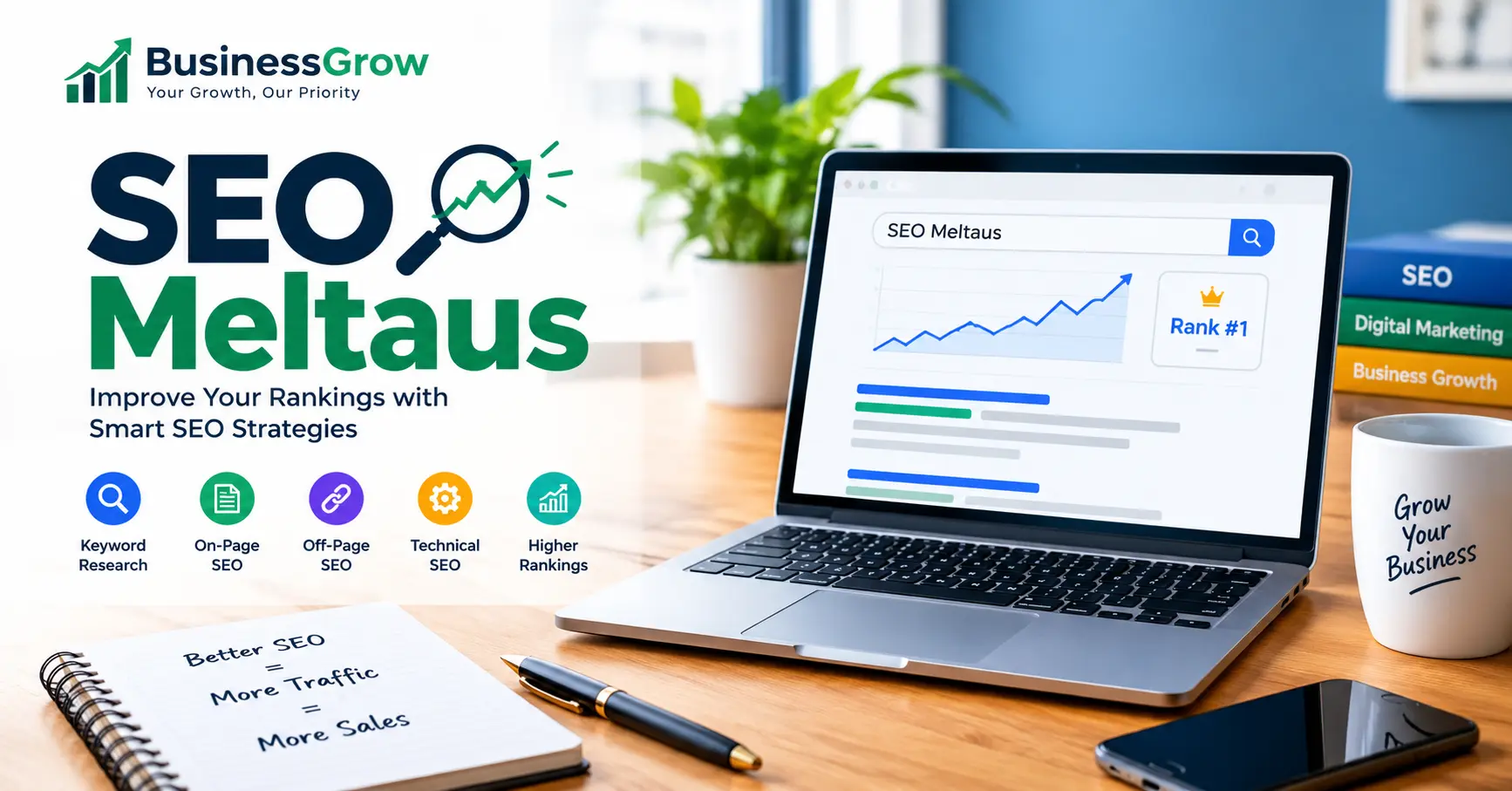
SEO Meltaus is the practice of optimizing a website so that it appears in Google Search, Google Maps and AI-generated answers when people look for businesses, services or accommodation in Meltaus, a village in the Rovaniemi area of Finnish Lapland. It combines local SEO, organic SEO and technical SEO to bring in nearby customers and visitors from abroad.
To rank for “SEO Meltaus“, a business needs a fast, mobile-friendly website, a fully completed Google Business Profile, consistent contact details across the web, location-specific pages written in the languages its customers search in, and clear, factual content that Google and AI Overviews can quote. Most small businesses can see early movement within a few months if the foundations are right.
Explore Our Organic SEO Services →
1. What Does “SEO Meltaus” Actually Mean?
Meltaus is a small village in the Rovaniemi area of Finnish Lapland. It sits close to one of the most visited destinations in the Arctic, which means the local economy leans on tourism, cottage and apartment rentals, outdoor activities, trades, transport and small family businesses.
When someone types “SEO Meltaus” into Google, they are usually one of three people:
- A local business owner who wants more customers from search engines.
- A marketer or freelancer researching how to promote a business in a small Lapland community.
- A service provider or agency looking for ways to work with Lapland-based clients.
In every case, the underlying need is the same. They want a practical, trustworthy way to make a small, geographically specific business easy to find online. That is exactly what search engine optimization is designed to do.
SEO for a place like Meltaus is different from SEO for a big city. The audience is smaller, the competition for some terms is thin, and the searches are often very specific. A cottage owner is not fighting thousands of rivals for the keyword “cottage Meltaus”, but they are competing with large booking platforms that dominate broader Rovaniemi searches. The goal is to win the specific, high-intent searches that bigger platforms ignore.
2. Why Businesses in Meltaus Need SEO
Most customers now start their search online. A traveller planning a trip to Lapland, a resident looking for a local tradesperson, or a company searching for a supplier will usually type a question into Google before calling anyone. If your business is not visible at that moment, the customer simply finds someone else.
Here is what good SEO does for a Meltaus business.
It puts you in front of ready-to-buy customers
Search traffic is intent-driven. A person searching for “cottage near Rovaniemi with lake view” already wants to book. SEO lets you appear at the exact moment of that decision, without interrupting anyone.
It reduces dependence on booking platforms
Many Lapland accommodation owners rely heavily on third-party marketplaces that charge commission. A strong website that ranks on Google brings direct enquiries and direct bookings, which protects your margins.
It builds long-term value
Paid ads stop the moment the budget ends. Organic rankings keep working while you sleep. A well-optimized page can keep bringing visitors for months or years with only light maintenance.
It works across seasons
Lapland has strong seasonal patterns. Winter brings snow, northern lights and Christmas-related travel. Summer brings midnight sun, fishing, hiking and berry picking. A year-round SEO plan lets you capture demand in every season and prepare content before peak periods begin.
It supports AI-driven search
Google’s AI Overviews and other AI assistants now summarize answers directly in search results. These systems pull from pages that are clear, accurate and well structured. SEO is no longer only about ten blue links. It is about being the source that machines trust and quote.
3. Understanding the Meltaus Search Landscape
Before you optimize anything, you need to understand how people actually search in this region. Four factors shape the landscape.
Multilingual searchers
Visitors to Lapland come from Finland, the rest of Europe, North America and Asia. Searches may be in Finnish, English, German, French or other languages. Residents will mostly search in Finnish. A single English-only page will miss a large share of potential customers.
Mixed local and tourist intent
Some people search from inside Finland for a local plumber or shop. Others search from thousands of kilometres away for a holiday stay. These are two different audiences with different keywords, and they need different pages.
Strong competition from big platforms
For broad terms such as “Rovaniemi hotels” or “Lapland activities”, large travel and booking sites dominate the results. Small businesses win by targeting narrower, more specific phrases and by showing real local expertise.
Map-driven behaviour
In a rural area, distance matters. People rely heavily on Google Maps to see what is nearby, how far it is from the airport or the city centre, and what other travellers say about it. That makes Google Maps and your business profile a central part of any local strategy.
4. Step 1: Build a Strong Organic SEO Foundation
Every successful local strategy sits on top of solid organic SEO. Organic SEO is the process of earning rankings through quality, relevance and authority rather than paying for placement. It has four connected parts.
- On-page SEO improves the content and structure of each page.
- Off-page SEO builds trust through links, mentions and reputation.
- Technical SEO makes sure search engines can crawl, understand and index your site.
- Local SEO connects your business to a specific place and the people nearby.
If one of these is weak, the others struggle. A beautifully written page on a slow, unindexed site will go nowhere. A technically perfect site with thin content will not satisfy searchers either.
Business Grow’s organic SEO services cover all four areas, so that no part of your visibility is left to chance. The approach focuses on sustainable rankings rather than short-term tricks.
If you want a broader view of how search marketing fits your business goals, the main SEO service page explains the overall approach, and you can also browse the SEO portfolio to see the kind of work involved.
5. Step 2: Keyword Research for Meltaus
Keyword research tells you what people really type, how specific they are, and which phrases are worth targeting. For a small place like Meltaus, the best opportunities are usually long-tail keywords that combine a service with a location or a particular need.
Types of keywords to target
| Keyword type | Example pattern | Search intent |
|---|---|---|
| Location + service | “cottage rental Meltaus” | Ready to book |
| Nearby-city + service | “accommodation near Rovaniemi” | Comparing options |
| Activity-based | “snowshoeing near Rovaniemi” | Planning a trip |
| Local trades | “electrician Rovaniemi area” | Urgent need |
| Informational | “how far is Meltaus from Rovaniemi” | Research |
| Brand + category | “[your business name] reviews” | Trust check |
How to find them
- Start with your own services. List everything you offer, in plain language.
- Add the place names. Combine each service with Meltaus, Rovaniemi and nearby areas that real customers mention.
- Check Google’s suggestions. The autocomplete dropdown and “People also ask” box reveal real questions.
- Review Search Console data. If your site already has traffic, see which queries bring impressions.
- Study competitors. Look at which pages rank for your target phrases and what they are missing.
- Group keywords by intent. Put booking terms on service pages and question terms on guides or blog posts.
Think in questions
AI Overviews favour pages that answer questions directly. Write down the questions your customers ask by phone and email. These are often the best content ideas, because they come from real demand rather than guesswork.
6. Step 3: On-Page SEO That Works
On-page SEO is everything you control on the page itself. For a Meltaus business, the following elements matter most.
Page titles and meta descriptions
Each page needs a unique title that includes its main keyword and, where relevant, the location. Keep titles concise so they display fully in search results. The meta description should read like a short invitation: what the page offers, who it is for and why to click.
Headings
Use one clear H1 per page, followed by logical H2 and H3 sections. Headings help both readers and machines understand how the content is organized. Phrase some of them as questions, such as “How far is Meltaus from Rovaniemi?”, so they match the way people search.
Opening paragraph
Put a direct, factual answer near the top of the page. AI Overviews often lift concise definitions and summaries. A short, accurate opening paragraph increases the chance of being quoted.
Natural language
Write the way a knowledgeable local would speak. Avoid stuffing keywords. Mention the place names naturally, along with landmarks, distances and practical details that show real familiarity.
Images
Use original photos of your property, your team or your work. Compress them so they load quickly, add descriptive file names and write helpful alt text such as “Wooden cottage with lake view near Meltaus in winter”.
Internal linking
Link related pages together so visitors and search engines can move easily through your site. For example, an accommodation page can link to a local activities guide, and a services page can link to a pricing or contact page.
Clear calls to action
Tell visitors what to do next. A visible “Book now”, “Request a quote” or “Call us” button turns traffic into customers.
7. Step 4: Local SEO and Google Business Profile
For a village-level business, local SEO is often the fastest route to visibility. Local SEO focuses on appearing in the map pack, in “near me” searches and in results that include a place name.
Business Grow’s local SEO service is designed for exactly this kind of work, and it is a natural next step once your core website is ready.
Optimize your Google Business Profile
Your Google Business Profile is often the first thing a customer sees. Make it complete and accurate.
- Choose the most accurate primary category and add relevant secondary ones.
- Write a clear business description that mentions what you do and where.
- Add opening hours, including seasonal changes and holiday exceptions.
- Upload high-quality photos regularly, covering exteriors, interiors, staff and surroundings.
- Add your services or products with short descriptions.
- Use posts to share seasonal offers, events and updates.
- Make sure your pin sits at the correct location on the map.
Keep your NAP consistent
NAP means name, address and phone number. These details must be identical everywhere they appear: your website, your Google profile, directories, social media and booking sites. Inconsistencies confuse search engines and weaken trust.
Build local citations
List your business in reputable Finnish and international directories, tourism portals and regional business listings. Quality matters more than quantity. Each listing should match your NAP exactly.
Collect and answer reviews
Reviews influence both rankings and decisions. Ask satisfied customers to leave an honest review, and reply to every one, positive or negative, in a polite and professional tone. Reviews written in several languages signal that you serve an international audience.
Create location-specific pages
If you serve more than one area, create a dedicated page for each, with real, useful information rather than copied text. Mention nearby landmarks, travel times and the specific needs of customers in that area.
Use local structured data
Add structured data for your local business so search engines understand your name, address, opening hours, reviews and services. Structured data helps with rich results and supports AI-generated summaries.
8. Step 5: Technical SEO Essentials
Technical SEO ensures that search engines can find, read and trust your website. For small business sites, a handful of fundamentals deliver most of the benefit.
Speed and Core Web Vitals
Slow pages lose visitors and rankings. Compress images, use modern formats, enable caching, minimize unnecessary scripts and choose reliable hosting. Aim for good scores on loading speed, interactivity and visual stability.
Mobile-first design
Most local and travel searches happen on phones, often while people are on the move or planning a trip in the evening. Your site must be fully responsive, with readable text, tappable buttons and fast loading on mobile networks.
Secure and crawlable
Use HTTPS across the entire site. Submit an XML sitemap through Google Search Console, keep your robots.txt file clean and avoid blocking important pages by mistake.
Clean URL structure
Use short, readable URLs that include a relevant keyword. Avoid long strings of numbers or unnecessary parameters.
Fix errors
Broken links, redirect chains, duplicate pages and missing tags quietly damage performance. A regular check keeps the site healthy.
Hreflang for multiple languages
If you publish in Finnish and English, or other languages, use hreflang tags so Google shows each version to the right audience and does not treat them as duplicates.
A professional SEO audit is the best way to find hidden technical problems. It reviews speed, crawlability, indexing, content and links, and delivers a prioritized list of fixes.
9. Step 6: Content, E-E-A-T and AI Overviews
Google rewards content that demonstrates E-E-A-T: experience, expertise, authoritativeness and trustworthiness. AI Overviews draw on the same signals. For a small local business, E-E-A-T is a real advantage, because you have first-hand knowledge that large platforms cannot fake.
Show real experience
Share what you know from living and working in the area. Write about conditions at different times of year, practical travel tips, safety advice, equipment recommendations and honest answers to common worries. Details such as how to get from the airport, what to pack in deep winter or when the roads are easiest to drive show genuine expertise.
Write for questions
Build helpful pages around real questions:
- What is there to do near Meltaus in winter?
- How do I get from Rovaniemi Airport to Meltaus?
- What should I pack for a Lapland cottage stay?
- When is the best time to see the northern lights?
- Which services do you offer in the Rovaniemi area?
Give each question a clear, direct answer in the first two sentences, then expand with detail. This structure suits both featured snippets and AI Overviews.
Use clear formatting
Short paragraphs, descriptive headings, bullet lists and simple tables make content easy to scan and easy for AI systems to extract. Avoid walls of text.
Keep information accurate and fresh
Update opening hours, prices, seasonal offers and travel information regularly. Outdated information harms trust and can cause AI systems to skip your page. Add a visible “last updated” date to guides and important pages.
Add author and business details
Show who is behind the content. A short author bio, a real business address, contact options and an About page all support trust. Visit the Business Grow about page for an example of how a company presents its story and credentials.
Use structured data wisely
Mark up FAQs, local business details, reviews and articles with the correct schema. Structured data does not guarantee a feature, but it helps search engines understand your content.
Create original, useful assets
Maps, seasonal checklists, price guides, comparison tables and original photography give people a reason to link to you and return. Original material is also less likely to be treated as generic.
How to increase your chance of appearing in AI Overviews
- Answer the main question clearly and early.
- Support the answer with facts, examples and specifics.
- Keep each section focused on one idea.
- Use headings that mirror real questions.
- Make sure the page is crawlable, fast and indexable.
- Build brand mentions and reviews across trusted websites.
- Maintain accurate, consistent business information everywhere.
No one can guarantee inclusion in AI Overviews. What you can do is make your content the clearest, most trustworthy answer available.
10. Step 7: Link Building and Off-Page SEO
Links from reputable websites tell search engines that your business is trusted. For a local business, the best links come from relevant, nearby and industry sources.
Realistic link opportunities
- Local business associations and chambers of commerce.
- Regional tourism websites and visitor guides.
- Local news, blogs and community pages.
- Suppliers, partners and neighbouring businesses.
- Event organizers and sponsorships.
- Industry directories and review platforms.
Earn links with useful content
Publish something worth referencing: a local guide, a seasonal calendar, original photography or a helpful tool. Share it with relevant partners and local publishers.
Avoid shortcuts
Buying cheap link batches can lead to penalties. A few relevant, genuine links are worth far more than hundreds of low-quality ones.
11. Step 8: Website Design, UX and Branding
Rankings bring visitors, but design converts them. A site that looks outdated, loads slowly or hides contact details will waste even the best traffic.
Clear structure
Visitors should understand what you offer within seconds. Use simple navigation, a clear headline and a visible call to action on the first screen.
Good user experience
Strong UI and UX design reduces friction. That means readable fonts, logical layouts, accessible colours and forms that are easy to complete on a phone.
Build or rebuild the right way
If your current site is slow, hard to update or not mobile-friendly, a rebuild may be the most effective SEO investment. Business Grow’s web design and development service builds responsive, SEO-ready websites.
See Web Design & Development →
Selling products online
If you sell products or experiences, an e-commerce website design with clean product pages and a smooth checkout supports both sales and search visibility. Online shops can also benefit from dedicated e-commerce SEO to improve category pages, product descriptions and technical structure.
Get E-Commerce Website Design →
Brand identity
Consistent visuals and messaging make a small business memorable. A professional logo, colour palette and tone of voice build recognition and trust, online and offline. The brand design service covers identity design, brand strategy and related creative work.
Explore Brand Design Service →
12. Step 9: Paid Ads and Social Media Support
SEO is powerful, but it works best alongside other channels. Paid ads can deliver quick visibility while organic rankings grow. Social media keeps your audience engaged between searches and gives you a place to share seasonal updates, photos and offers.
Paid ads work well for launching a new service, covering peak seasons and testing keywords before you invest in long-term content. Social media does not directly lift rankings, but it builds awareness, drives traffic and encourages the reviews and mentions that support local visibility. Seasonal photography performs especially well for Lapland businesses.
Business Grow’s digital marketing service covers Google Ads, Facebook and Instagram marketing and campaign management, so paid and organic efforts can support each other.
Get Digital Marketing Service →
13. Measuring Results
SEO should be measured against business outcomes, not only rankings.
Key metrics to track
| Metric | What it tells you | Where to find it |
|---|---|---|
| Organic traffic | How many visitors arrive from search | Google Analytics |
| Impressions and clicks | How often you appear and get chosen | Google Search Console |
| Keyword positions | Whether target terms are improving | Rank tracking tools |
| Google Business Profile actions | Calls, direction requests, website clicks | Business Profile insights |
| Enquiries and bookings | Real business results | CRM, email, booking system |
| Review count and rating | Reputation and trust | Google and booking platforms |
| Page speed and Core Web Vitals | Technical health | Search Console, PageSpeed tools |
Set clear goals
Before starting, decide what success looks like. It might be ten more direct booking enquiries per month, more calls from the Rovaniemi area, or a first-page ranking for your top five keywords. Review results monthly and adjust.
Be patient but not passive
SEO takes time, usually several months to show strong results. In a low-competition village-level market, gains can come faster, but you should still review progress regularly and keep improving.
14. Common SEO Mistakes to Avoid
Small businesses often lose momentum through avoidable errors.
- Ignoring Google Business Profile. It is one of the most valuable free assets you have.
- Publishing only in one language when customers search in several.
- Copying text from other sites or reusing the same description on every page.
- Stuffing keywords instead of writing naturally.
- Letting information go out of date, especially hours, prices and seasonal details.
- Neglecting mobile experience.
- Skipping technical basics such as sitemaps, HTTPS and speed.
- Using inconsistent business details across directories.
- Buying low-quality links.
- Expecting instant results and abandoning the strategy too early.
- Not tracking anything, which makes improvement impossible.
- Having no clear call to action.
15. A 90-Day SEO Plan for Meltaus
A simple, phased plan keeps the work manageable.
Days 1 to 30: Foundation
- Run a full SEO audit and fix critical technical issues.
- Claim and complete your Google Business Profile.
- Clean up NAP details across all listings.
- Complete keyword research and map keywords to pages.
- Improve titles, headings, meta descriptions and internal links.
- Improve mobile speed and fix broken links.
Days 31 to 60: Content and local signals
- Publish or improve your core service and location pages.
- Add FAQ sections written in a direct, answer-first style.
- Add structured data for your business, FAQs and reviews.
- Start collecting reviews with a simple, polite request process.
- Add original photos and optimized alt text.
- Begin local citation building in trusted directories.
Days 61 to 90: Authority and growth
- Publish two or three helpful guides based on real customer questions.
- Pursue local links from partners, tourism sites and community pages.
- Test a small paid campaign for peak-season terms.
- Review analytics and Search Console data.
- Refine pages that are close to page one.
- Plan the next quarter’s content around upcoming seasons.
This plan can be adapted to any size of business. The key is to work steadily and let the results compound.
16. Why Work With Business Grow
Doing SEO well takes time, tools and experience. Many small business owners prefer to focus on their customers and hand the technical work to specialists.
Business Grow is a digital growth agency based in Dhaka, Bangladesh, with a team that works with clients locally and internationally. The agency combines SEO, web design and development, brand design and digital marketing under one roof, so your search strategy and your website work together instead of pulling in different directions.
What you can expect
- Clear strategy. Every plan starts with research into your market, audience and goals.
- Full-service support. SEO, design, development, branding and advertising from one team.
- Transparent packages. You can review the pricing page to see current plans before you commit.
- Ongoing improvement. Reporting and optimization continue after launch.
- Industry experience. Browse the industries page to see the kinds of businesses the agency supports.
Services that support your SEO
| Service | How it helps |
|---|---|
| Organic SEO Services | Builds sustainable rankings through on-page, off-page and technical work |
| SEO Service | Complete search strategy and ongoing optimization |
| SEO Audit | Finds and prioritizes technical and content issues |
| Local SEO Service | Improves map and “near me” visibility |
| E-Commerce SEO Service | Optimizes online shops for search |
| UI & UX Design | Turns visitors into customers |
| E-Commerce Website Design | Builds conversion-focused online stores |
| Web Design & Development | Creates fast, responsive, SEO-ready websites |
| Brand Design Service | Builds a recognizable identity |
| Digital Marketing Service | Adds paid ads and social media support |
17. Frequently Asked Questions
What is SEO Meltaus?
SEO Meltaus means optimizing a website and online presence so a business appears in search results, maps and AI answers for searches connected to Meltaus and the surrounding Rovaniemi area. It includes local SEO, organic SEO, technical SEO and content optimization.
Where is Meltaus?
Meltaus is a village in the Rovaniemi area of Finnish Lapland, in northern Finland. Many people search for it in connection with nearby accommodation, nature and travel in the Rovaniemi region.
Why is local SEO important for a small village business?
In a small community, customers often find businesses through Google Maps and “near me” searches. Local SEO makes sure your profile, address, reviews and website all show up when people nearby, or planning a visit, look for what you offer.
How long does SEO take to work in a small market?
Results vary by competition, website quality and effort. Low-competition local searches can respond in a few months, while more competitive terms take longer. Consistent work usually matters more than a single big push.
Do I need a website, or is a Google Business Profile enough?
A Google Business Profile is essential, but a website gives you control, depth and credibility. It lets you rank for more searches, explain your services properly, collect direct enquiries and publish content that AI systems can quote.
Should my website be in Finnish, English or both?
If your customers include both Finnish speakers and international visitors, publish in both languages and use hreflang tags so each version reaches the right audience. Quality matters more than quantity, so avoid poorly translated pages.
What are the best keywords for a business near Meltaus?
The best keywords combine a service with a place name or a specific need, such as “cottage near Rovaniemi”, “snowmobile safari Rovaniemi area” or “electrician Rovaniemi”. Use keyword research tools and Search Console to confirm which phrases real customers use.
How can I appear in Google AI Overviews?
There is no guaranteed method, but you can improve your chances by answering questions clearly, using well-structured pages, showing genuine experience, keeping information accurate and building trust through reviews and mentions. Pages that are fast, crawlable and helpful are more likely to be used.
How much does SEO cost?
Costs depend on the scope of work, your competition and your goals. You can review current plans on the Business Grow pricing page or contact the team for a customized recommendation.
18. Final Thoughts
SEO Meltaus is about making a small, specific place and the businesses within it easy to find online. The opportunity is real: customers are searching, the long-tail competition is manageable, and many local businesses have not yet invested properly in their online presence.
The path is clear. Build a fast, mobile-friendly website. Complete your Google Business Profile. Research the keywords people truly use. Publish helpful, accurate content in the languages your customers speak. Earn trust through reviews and relevant links. Measure the results and keep improving.
You do not need to do everything at once, but you do need to start. Each improvement compounds, and in a market as focused as Meltaus and the Rovaniemi area, steady effort can put you well ahead of your competitors.
If you would like expert help, Business Grow can guide you from audit to strategy to ongoing growth.