Kosken SEO: The Complete Local SEO Guide to Rank Your Koski Business on Google and AI Overviews
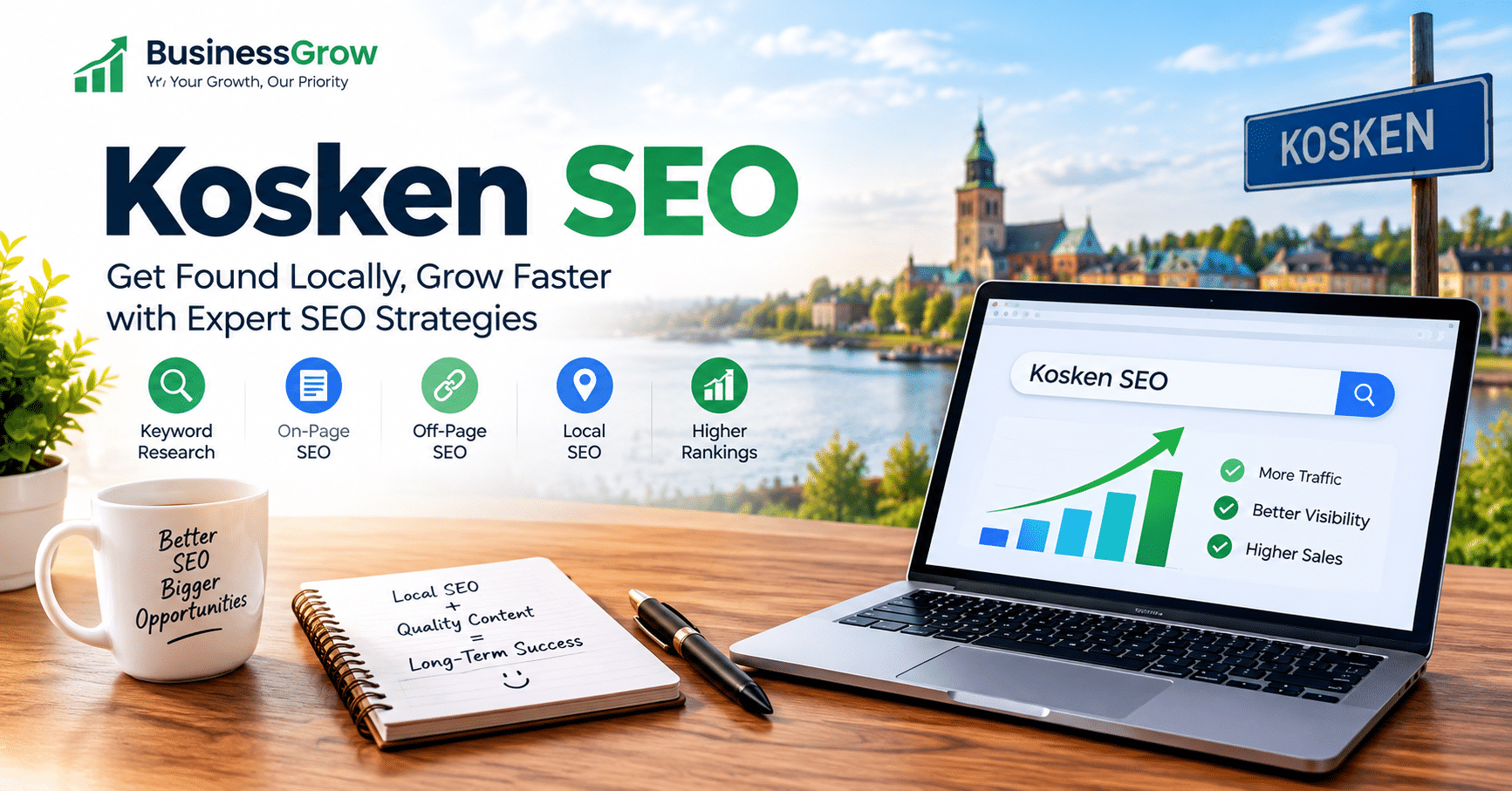
If you run a business in or around Koski, Finland, your next customer is probably typing a search into Google right now. They might be looking for a plumber, a café, a repair shop, a farm product, a clinic or a craftsman. They want an answer fast, and they usually pick one of the first businesses they see. Kosken SEO is the practice of making sure that business is yours.
This guide explains what Kosken SEO means, why it matters, and exactly how to do it. You will learn how local search works, how Google’s AI Overviews change the rules, and which steps deliver the fastest results. Everything is written in plain language, so you can apply it yourself or hand it to a specialist.
Explore Our Organic SEO Services →
Table of Contents
- Quick Answer: What Is Kosken SEO?
- Why Local SEO Matters for Businesses Around Koski
- How Google AI Overviews Change Local Search
- Keyword Research for Kosken SEO
- On-Page SEO for Koski Websites
- Google Business Profile Optimization
- Local Citations and NAP Consistency
- Content Strategy That Builds Local Authority
- Technical SEO Essentials
- Local Link Building
- Reviews and Reputation
- SEO for Local Online Shops
- How to Measure Kosken SEO Results
- A 90-Day Kosken SEO Action Plan
- Common Mistakes to Avoid
- How to Choose an SEO Partner
- Frequently Asked Questions
- Final Thoughts
What Is Kosken SEO?
Kosken SEO is local search engine optimization for businesses, organizations and websites connected to Koski in Finland. It combines Google Business Profile optimization, local keyword targeting, location-based content, citations, reviews and technical website health so that people searching in or about the Koski area find your business first.
In Finnish, “Kosken” is the genitive form of “Koski,” so “Kosken SEO” literally reads as “Koski’s SEO.” The word koski also means “rapids” in Finnish, which is why many places carry the name. For a business owner, the practical meaning is simple: you want to appear when nearby customers search for what you offer.
The short version of how it works:
- Claim and perfect your Google Business Profile.
- Target local keywords in Finnish and, where useful, English.
- Build service pages and a clear location page.
- Keep your name, address and phone number identical everywhere.
- Collect honest reviews and reply to them.
- Make your site fast, mobile-friendly and easy to crawl.
- Publish helpful content that answers real local questions.
Those seven actions are the core of every successful local SEO campaign, whether the town has two thousand people or two million.
Why Local SEO Matters for Businesses Around Koski
Local search is different from general search. When someone searches for “bakery near me” or “car repair Koski,” Google is not trying to show the biggest brand in the world. It is trying to show the most relevant, closest and most trusted option.
That is good news for smaller places. A well-optimized local business can outrank much larger companies for searches that carry a location.
Customers search before they visit
Almost every purchase journey now begins with a phone. People check opening hours, read reviews, compare prices and look at photos before they leave the house. If your business is missing, incomplete or inconsistent online, you lose the visit before it ever happens.
Google dominates search in Finland
Google is the main search engine used by Finnish consumers, which means one platform decides most of your visibility. Optimizing for Google Search and Google Maps covers the large majority of your potential local traffic. Bing and other engines still matter a little, but Google is where the effort pays back fastest.
Smaller markets reward early movers
In a small community, competition for local keywords is often thin. Many businesses have an outdated website or an unclaimed listing. If you do the basics properly, you can reach the top of local results in months rather than years.
Local intent is high intent
A person who searches for a service in a specific place usually wants to act soon. Local searches tend to lead to calls, direction requests, bookings and visits. That makes each local ranking more valuable than a generic ranking with the same traffic.
How Google AI Overviews Change Local Search
Google now shows AI-generated summaries called AI Overviews for many queries. They pull information from several sources, summarize it, and link to the pages they used. For local businesses, this changes how visibility works in three important ways.
1. Clear answers get cited
AI Overviews favor pages that give direct, well-structured answers. If your service page begins with a short, factual answer to a customer question, it is more likely to be used as a source. This is why the “Quick Answer” format at the top of this article matters.
2. Trust signals matter more
AI systems lean on content that looks reliable. That means accurate business details, real reviews, author or company information, and consistent facts across the web. Contradictory information weakens your chances.
3. Local pack and Maps remain essential
For “near me” and place-based searches, Google still leans heavily on Maps data. A complete Google Business Profile is the foundation. AI features usually draw on that profile information when summarizing local options.
How to write for AI Overviews
- Put a direct answer in the first two sentences under each heading.
- Use headings that match real questions customers ask.
- Keep paragraphs short, with one idea each.
- Use lists and simple tables for steps, comparisons and features.
- Include a genuine FAQ section with concise answers.
- Mention your location, services and hours in plain text, not only in images.
- Keep facts consistent across your website, profile and directories.
Good AI Overview optimization is not a trick. It is clear writing, accurate facts and a well-organized website.
Keyword Research for Kosken SEO
Keyword research tells you what your customers actually type. For local SEO, you need three layers of keywords.
Layer 1: Service keywords
These describe what you do. Examples include “electrician,” “hairdresser,” “car service,” “bakery,” “accounting” or “web design.” Write them in Finnish first, because that is how most local customers search. Add English versions if you serve tourists, seasonal visitors or international clients.
Layer 2: Location modifiers
Combine each service with the place name. Typical patterns include:
- Service + Koski (“kampaamo Koski”)
- Service + near me
- Service + neighboring town
- Koski + category (“Koski ravintola”)
- Koski + brand, for example when people search for a business by name
Because several places in Finland share the name Koski, always include the municipality or region in your page copy so Google understands which one you mean. This disambiguation step is one of the most overlooked parts of Kosken SEO.
Layer 3: Question keywords
These are the questions customers ask before they buy. They are perfect for blog posts and FAQs. Examples:
- How much does [service] cost in Koski?
- When is [business] open on weekends?
- What should I check before hiring a [service provider]?
- How long does [service] take?
How to find keywords
- Start with Google’s autocomplete and the “People also ask” box.
- Check what your competitors rank for using any SEO tool.
- Look at Google Search Console to see queries that already bring impressions.
- Ask real customers how they found you and what they typed.
- Group the keywords by intent: information, comparison or purchase.
Choose one primary keyword per page and two or three secondary keywords. Never force a keyword into every sentence. Natural writing performs better, and it reads better too.
On-Page SEO for Koski Websites
On-page SEO means optimizing the content and structure of each page so search engines understand it and visitors enjoy it.
Title tags and meta descriptions
The title tag is the clickable headline in search results. Keep it under about 60 characters, put the main keyword near the front, and include the location. The meta description should be under about 160 characters and give a reason to click. It does not directly boost rankings, but a better description earns more clicks, and clicks matter.
Headings
Use one H1 per page that states the main topic. Break the content into H2 and H3 sections that follow the questions customers have. Headings are also a major signal for AI Overviews.
Service pages
Create one page for every core service. Do not squeeze everything onto the home page. Each service page should include:
- A clear explanation of the service
- Who it is for
- How the process works
- Pricing guidance or what affects the price
- Photos or examples of your work
- Local details, such as service area and visit options
- A clear call to action (call, book, request a quote)
Location page
If you serve Koski and nearby areas, build a page for the main location and, when it makes sense, separate pages for surrounding towns. Each page must contain unique, useful content. Copying the same text and swapping the town name is thin content, and Google treats it that way.
Images
Compress images, use descriptive file names, and write honest alt text. Real photos of your team, shop and work build more trust than generic stock pictures.
Internal linking
Link related pages together with descriptive anchor text. A blog post about local SEO should link to your service page, and the service page should link back to helpful guides. Internal links spread authority and help visitors move toward a purchase.
Get Professional SEO Service →
Google Business Profile Optimization
For most local businesses, the Google Business Profile (GBP) is the single most important asset. It controls how you look in Google Maps and the local pack.
Claim and verify
Search for your business name. If a profile already exists, claim it. If not, create one and complete the verification process Google requires.
Fill in every field
- Business name: Use your real name only. Adding keywords can lead to suspension.
- Categories: Choose the most accurate primary category and add secondary ones that truly apply.
- Address and service area: Be precise, and use service areas if you travel to customers.
- Phone and website: Use a local number and link to the most relevant page.
- Hours: Keep regular, holiday and seasonal hours accurate.
- Services and products: List each one with a short description.
- Attributes: Add accessibility, payment options and other relevant details.
Use photos and posts
Upload high-quality photos of the exterior, interior, team and products. Add new photos regularly. Use posts to announce offers, events and updates. Active profiles look alive, and that builds trust.
Answer questions and messages
Respond quickly to questions and messages. Fast replies improve customer experience and signal that your business is active.
Monitor changes
Other people can suggest edits to your profile. Check it often to make sure phone numbers, hours and categories are still correct.
Local Citations and NAP Consistency
A citation is any online mention of your business name, address and phone number, known together as NAP. Citations appear in directories, maps, chambers of commerce, industry sites and social profiles.
Why consistency matters
Search engines compare citations to confirm that your business is real and where it says it is. If your listings show different phone numbers, old addresses or alternate business names, trust drops. Consistent data builds confidence, and confidence helps rankings.
How to build citations
- Choose one exact format for your business name, address and phone number.
- Update your website and social profiles to match.
- Add listings to major Finnish and international directories, such as business directories, local portals and map services.
- Include relevant industry directories.
- Remove or merge duplicate listings.
- Recheck each listing every few months.
Quality matters more than quantity. Twenty accurate, relevant listings are better than two hundred messy ones.
Content Strategy That Builds Local Authority
Content is how you prove expertise. For Kosken SEO, the goal is to become the most helpful source in your area for your topic.
Write for real local questions
Think about what your customers ask at the counter, on the phone or by email. Turn each question into a page or section. A local heating company can write about winter maintenance. A café can write about seasonal menus and local suppliers. A consultant can write about regional business support and regulations.
Cover topics in clusters
Instead of publishing random posts, build a topic cluster. Create one main guide, then support it with related articles that link back to it. For example, a main guide on local SEO could connect to articles on Google Business Profile, local keywords, reviews and Search Console. Clusters show depth, and depth builds topical authority.
Use local proof
Case studies, customer stories, photos from local projects and quotes from real clients are powerful. They show that you are active in the community and give search engines unique content that competitors cannot copy.
Keep content fresh
Review your main pages at least twice a year. Update prices, opening hours, images and statistics. Add new questions to FAQ sections. Fresh, accurate pages perform better and are more likely to be quoted by AI systems.
Write in the right language
Many customers search in Finnish, some in Swedish and others in English. Decide which languages you actually serve, and write natural, native-quality copy for each. Machine-translated pages hurt trust. Use language tags properly so search engines can show the right version to the right user.
Explore Ecommerce SEO Service →
Technical SEO Essentials
Technical SEO makes sure search engines can find, read and index your website without problems. Even the best content cannot rank if the technical foundation is broken.
Mobile-first design
Most local searches happen on phones, and Google evaluates the mobile version of your site first. Buttons should be easy to tap, text should be readable without zooming, and phone numbers should be clickable.
Page speed and Core Web Vitals
Slow pages lose visitors and rankings. Improve speed by compressing images, using caching, reducing heavy scripts and choosing reliable hosting. Pay attention to Google’s Core Web Vitals, which measure loading, interactivity and visual stability.
HTTPS and security
Your website should use HTTPS. Secure sites protect visitors, and browsers warn people away from insecure ones.
Crawlability and indexing
- Submit an XML sitemap in Google Search Console.
- Check that important pages are not blocked by robots rules.
- Fix broken links and redirect chains.
- Use clean, readable URLs.
- Avoid duplicate pages with unclear canonical tags.
Structured data
Add schema markup for LocalBusiness, Organization, FAQPage, Service and Review where appropriate. Structured data helps Google understand your business details and can make your listings eligible for richer results. Make sure the data matches what is visible on the page.
Accessibility
Good accessibility, such as readable contrast, proper headings and descriptive links, helps everyone and aligns with how search engines evaluate quality.
If you are unsure where your site stands, a professional audit can reveal technical issues quickly.
Local Link Building
Links from other websites act like recommendations. In local SEO, relevant local links are especially valuable.
Where to earn local links
- Local business associations and chambers of commerce
- Municipal and regional event pages
- Local news sites and community blogs
- Sponsorships of clubs, teams and festivals
- Supplier and partner websites
- Schools, colleges and training programs you work with
- Charity and volunteer projects
How to earn them naturally
- Create something worth linking to, such as a local guide, a useful tool or original data.
- Share news about community involvement with local media.
- Ask partners to list you on their “where to buy” or “partners” pages.
- Host or sponsor an event and make sure the organizers link to you.
- Offer expert comments to local journalists and bloggers.
Avoid buying bulk links or joining link schemes. They can lead to penalties, and they never build the real-world reputation that lasting rankings depend on.
Reviews and Reputation
Reviews influence both rankings and decisions. Customers read them closely, and Google uses them as a trust signal.
How to get more reviews
- Ask every satisfied customer, ideally right after the service.
- Send a short follow-up message with a direct review link.
- Make it easy by printing a QR code on receipts, cards or signs.
- Train staff to mention reviews politely.
Never offer payment for positive reviews, and never write fake ones. It violates platform rules and can destroy your credibility.
How to respond
Reply to every review. Thank people for positive feedback and mention something specific. For negative reviews, stay calm, apologize where appropriate, explain what you will do, and offer to continue offline. Prospective customers read your replies, and a polite answer can turn a bad review into proof of good service.
Keep a steady flow
A steady stream of recent reviews looks more natural and convincing than a sudden burst. Aim for consistency instead of speed.
SEO for Local Online Shops
Many Koski businesses also sell online, whether crafts, food products, equipment or services. Local SEO and e-commerce SEO work well together.
Optimize product and category pages
Give each product a unique title, a helpful description and clear specifications. Avoid copying manufacturer text. Group items into logical categories and write short introductions for each category page.
Support pickup and delivery
If you offer local pickup or delivery, say so clearly, and mention the area you cover. This helps you capture “near me” shoppers who want fast options.
Use product schema and reviews
Add structured data for products, prices, availability and ratings. Real customer reviews on product pages increase trust and click-through rates.
Connect online and offline
Show your physical shop address, opening hours and local contact details on your site. Use the same information on your Google Business Profile and, if you have inventory, consider connecting product data to Google’s merchant tools so local shoppers can see what is in stock.
How to Measure Kosken SEO Results
SEO without measurement is guesswork. Track these indicators every month.
Key metrics
| Metric | Where to find it | What it tells you |
|---|---|---|
| Organic clicks and impressions | Google Search Console | Overall visibility |
| Local keyword rankings | Rank tracker or Search Console | Position for target terms |
| Profile views, calls and direction requests | Google Business Profile | Local engagement |
| Website sessions from organic search | Google Analytics | Traffic quality |
| Conversions (forms, calls, bookings) | Analytics goals | Business impact |
| Review count and average rating | Business Profile | Reputation strength |
Set realistic expectations
Local SEO usually shows early improvements in one to three months, such as better profile visibility and a few keyword gains. Stronger, more stable rankings often take three to six months, depending on competition and your starting point. Be wary of anyone who promises instant first-place results.
Review and adjust
Each month, compare the numbers with the previous period. Identify which pages gained, which declined and which keywords are close to page one. Then focus your next round of work on those opportunities.
A 90-Day Kosken SEO Action Plan
Here is a practical schedule you can follow.
Days 1 to 30: Foundation
- Audit your current website, listings and Search Console data.
- Claim, verify and fully complete your Google Business Profile.
- Standardize your NAP details everywhere.
- Research local keywords and choose a primary keyword for each key page.
- Fix major technical problems, including speed, mobile layout and broken links.
- Rewrite title tags, meta descriptions and headings on your main pages.
Days 31 to 60: Content and trust
- Build or improve service pages and the main location page.
- Add FAQs with direct, concise answers.
- Add LocalBusiness and FAQ schema.
- Publish two to four helpful local articles.
- Launch a review request routine.
- Add listings to the most relevant directories.
Days 61 to 90: Authority and growth
- Begin local outreach for links and partnerships.
- Publish more cluster content tied to your core topic.
- Update Business Profile posts and photos weekly.
- Review analytics, then double down on pages that show momentum.
- Create a six-month roadmap based on what worked.
Repeating this cycle every quarter keeps your visibility growing and protects you from slow decline.
Common Mistakes to Avoid
- Ignoring Google Business Profile. An incomplete profile can cost you more traffic than a weak website.
- Using inconsistent business details. Different phone numbers or addresses confuse search engines.
- Copying the same page for every town. Duplicate location pages offer no value.
- Keyword stuffing. Repeating a phrase unnaturally harms readability and rankings.
- Neglecting mobile users. A page that is hard to use on a phone will lose visitors.
- Buying fake reviews or links. Short-term gains can lead to long-term penalties.
- Publishing and forgetting. Outdated hours and prices damage trust.
- Not tracking results. Without data, you cannot tell what to improve.
- Ignoring the place-name confusion. Because several places share the Koski name, always state the municipality or region clearly.
- Expecting overnight results. SEO is a steady process, not a switch.
How to Choose an SEO Partner
You can do much of Kosken SEO yourself, but many owners prefer to work with experts so they can focus on running the business. When you choose a partner, look for these qualities.
Transparency
A good agency explains what it will do, why, and how it will report progress. Avoid anyone who hides methods or refuses to share access to reports.
Local and technical skill
Your partner should understand Google Business Profile, local citations, technical SEO, content and AI search. Ask for examples of work and measurable results.
Realistic promises
Honest providers talk about ranges, timelines and effort. They never guarantee a specific position.
Clear pricing
Look for simple, published packages that match your needs. For example, Business Grow lists SEO plans starting at $399 per month for the Starter package, $599 per month for Bronze and $799 per month for the Golden plan, with differences in keyword coverage, on-page work, technical fixes and content support. You can compare the full details on the pricing page.
Full-service support
SEO works best when your website, branding and marketing support each other. A team that can also help with web design, e-commerce setup, brand identity and paid ads can keep everything consistent.
Business Grow is a digital agency that delivers SEO, web design and development, brand design and digital marketing for clients locally and internationally. Its team can support a Kosken SEO campaign from audit to ongoing optimization.
Related services you may find useful:
Frequently Asked Questions
What does “Kosken SEO” mean?
Kosken SEO means search engine optimization for businesses connected to Koski, Finland. “Kosken” is the Finnish genitive of “Koski,” so the phrase refers to SEO for the Koski area. It focuses on local rankings in Google Search and Google Maps.
Why is local SEO important for small businesses in Koski?
Local SEO helps nearby customers find you when they are ready to buy. Local searches usually show high intent, so they lead to calls, visits and bookings. In smaller communities, competition is often lower, which means good optimization can produce quick results.
How long does Kosken SEO take to work?
Most businesses see early improvements within one to three months, such as more profile views and better rankings for easier keywords. Stronger results typically take three to six months. The timeline depends on competition, website quality and how consistently you work.
How much does local SEO cost?
Costs vary with the scope of work. Some agencies offer monthly packages that cover keyword targeting, on-page optimization, technical fixes and content. Business Grow’s published SEO plans range from $399 to $799 per month. The right option depends on how many keywords and pages you need to improve.
Do I need a website if I have a Google Business Profile?
You can get some visibility with only a profile, but a website gives you far more control and ranking potential. It lets you explain services, show proof, capture leads and earn links. The strongest local results come from a well-optimized profile and website working together.
How do I rank in Google Maps?
Complete and verify your Google Business Profile, choose accurate categories, keep NAP details consistent, earn reviews, add photos and build local relevance with your website content. Proximity, relevance and prominence are the three main factors Google considers for local results.
Can I appear in Google AI Overviews?
Yes. AI Overviews cite pages that answer questions clearly, display accurate information and appear trustworthy. Use direct answers under question-style headings, add FAQ sections, keep facts consistent and build genuine reviews and mentions. No one can guarantee a citation, but good structure improves your chances.
Should I write content in Finnish or English?
Write in the language your customers use to search. Finnish is usually the priority for local audiences, while English helps if you serve tourists, seasonal visitors or international clients. Make sure each language version is written naturally, not machine-translated.
What is NAP and why does it matter?
NAP stands for name, address and phone number. When these details match across your website, Google profile and directories, search engines trust your business information more. Inconsistent details can reduce rankings and confuse customers.
How often should I update my SEO?
Review your key pages and profile at least every quarter. Update hours, prices, services and photos whenever they change. Publish new helpful content regularly, and check your analytics monthly so you can spot problems early.
Is SEO better than paid ads for local businesses?
They serve different goals. Ads can bring traffic immediately but stop when you stop paying. SEO takes longer to build, but it can deliver steady, lower-cost traffic over time. Many businesses use both: ads for quick results and SEO for lasting growth.
Can I do Kosken SEO myself?
Yes, many basic tasks are manageable, including profile setup, citations and review requests. Technical fixes, content strategy and competitive analysis can be time-consuming. If you lack the time or experience, a trusted SEO team can speed up results and help you avoid costly mistakes.
Final Thoughts
Kosken SEO is not about complicated tricks. It is about showing Google, and the people who use it, that your business is real, relevant and trustworthy in your area. Start with a complete Google Business Profile. Choose the right local keywords. Build clear, helpful pages that answer real questions. Keep your details consistent. Earn honest reviews. Maintain a fast, secure, mobile-friendly website. Then measure, improve and repeat.
As Google’s AI Overviews keep reshaping search, the businesses that win will be the ones with accurate information, clear answers and genuine local credibility. Those are the same qualities that earn customers in person, and now you can earn them online as well.
If you want expert help, Business Grow can audit your current position, build a custom plan and handle the optimization work so you can focus on serving your customers.
Start with Organic SEO Services →