Hamari SEO Services: The Complete 2026 Guide to Ranking Higher on Google and AI Overviews
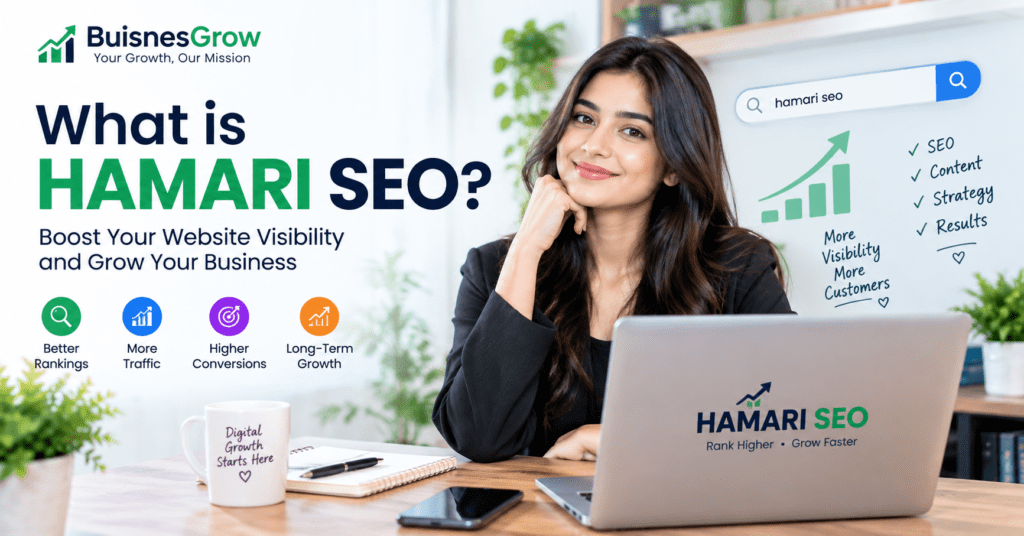
Search has changed more in the last two years than in the previous decade. Google no longer just returns ten blue links — it now generates AI Overviews, answers questions directly on the results page, and rewards websites that prove real expertise and trust. If your business still relies on outdated SEO tactics from 2018, you are likely losing visibility to competitors who have adapted.
This guide breaks down everything you need to know about Organic SEO Services — what they are, why they matter more than ever in the AI search era, and how a structured, professional approach can help your website rank higher on both traditional Google results and AI-generated answers.
What Is Organic SEO, and Why It Still Wins in 2026
Organic SEO refers to the practice of improving a website’s visibility in unpaid, natural search results — as opposed to paid advertising like Google Ads. It is called “organic” because the traffic grows naturally, driven by relevance, authority, and user experience rather than a budget you spend per click.
Unlike paid campaigns that stop generating traffic the moment you stop paying, organic SEO compounds over time. A well-optimized page published today can continue attracting visitors for years. This is why businesses that invest early in SEO services consistently outperform competitors who rely solely on ads.
There are three main reasons organic SEO remains one of the highest-ROI marketing channels available:
- It targets active intent. People searching Google are already looking for a solution — SEO puts your business in front of them at the exact right moment.
- It builds compounding value. Every optimized page, backlink, and piece of content adds to your site’s long-term authority.
- It is trusted more than ads. Studies consistently show users click organic results more often than sponsored ones, because organic rankings feel earned rather than bought.
The catch is that organic SEO takes strategy, consistency, and technical precision. This is where a structured approach — rather than guesswork — makes the difference between a website that ranks and one that gets buried on page five.
How Google’s AI Overviews Changed the Rules of Ranking
Google’s AI Overviews (and similar AI-generated answers on Bing and other engines) now appear above traditional search results for a huge share of queries. Instead of just listing links, Google’s AI reads across multiple trusted sources and generates a direct answer, often citing two or three websites as references.
This shift means ranking well is no longer just about keyword placement. To be featured in an AI Overview, a page typically needs to demonstrate:
- Clear, direct answers near the top of the content, structured in a way that is easy to extract and summarize.
- Strong topical depth, covering a subject comprehensively rather than superficially.
- Demonstrated expertise (E-E-A-T) — Experience, Expertise, Authoritativeness, and Trustworthiness — through author credentials, citations, and consistent publishing history.
- Clean technical structure, including proper headings, schema markup, and fast load times, so AI crawlers can parse the content accurately.
Businesses that adapt their content strategy to these new signals are seeing outsized gains in visibility, while sites still writing thin, keyword-stuffed pages are losing ground — even if they used to rank well. A modern SEO service provider builds content and site structure specifically with this AI-search reality in mind, not just for the “old” Google algorithm.
The Four Pillars of a Complete SEO Strategy
Effective SEO is not a single task — it’s the combination of four interconnected disciplines. Neglecting any one of them creates a bottleneck that limits how high your site can realistically rank, no matter how strong the others are.
| Pillar | What It Covers | Primary Goal |
|---|---|---|
| On-Page SEO | Content, keywords, internal linking, page structure | Relevance |
| Off-Page SEO | Backlinks, brand mentions, digital PR | Authority |
| Technical SEO | Site speed, crawlability, indexing, security | Accessibility |
| Local SEO | Google Business Profile, citations, local content | Proximity & Intent |
The sections below break down each pillar in detail.
On-Page SEO: Building the Foundation
On-Page SEO covers everything you control directly on your own website’s pages — the content itself, the HTML structure, and how clearly each page communicates its purpose to both users and search engines.
Core On-Page Elements
- Title tags and meta descriptions — concise, keyword-relevant, and written to earn clicks, not just rankings.
- Header hierarchy (H1–H4) — a logical structure that helps both readers and AI systems understand how content is organized.
- Keyword placement — natural integration of primary and related terms, avoiding the outdated practice of keyword stuffing.
- Internal linking — connecting related pages on your site (for example, linking your SEO Service page to your SEO Audit and Local SEO pages) so search engines understand site structure and users can navigate deeper into your offerings.
- Image optimization — descriptive alt text and compressed file sizes that support both accessibility and page speed.
- Content depth and originality — comprehensive coverage of a topic that genuinely answers the searcher’s question, rather than thin, recycled content.
Why On-Page SEO Matters
On-page signals are the first thing both Google’s crawlers and AI summarization systems evaluate. A page that is well-structured, clearly written, and internally linked to related resources is far more likely to be selected as a source for an AI Overview or to rank in the top organic positions. Businesses that skip this step often see decent traffic to their homepage but almost nothing to their service pages — a clear sign the on-page foundation is missing.
Explore Our SEO Service Packages
Off-Page SEO: Earning Authority and Trust
If on-page SEO is about what you say on your own site, off-page SEO is about what the rest of the internet says about you. It is the practice of building your site’s authority and credibility through external signals — most importantly, backlinks from other reputable websites.
Key Off-Page Tactics
- Backlink building — earning links from relevant, authoritative websites through outreach, guest content, and partnerships.
- Brand mentions — even unlinked mentions of your business name contribute to how search engines perceive your authority.
- Digital PR — getting featured in industry publications, news outlets, and niche blogs.
- Social signals — while not a direct ranking factor, active social profiles support brand visibility and indirectly drive link-worthy attention.
- Local citations — consistent business listings across directories, which double as a local SEO signal (covered in Section 7).
Why Off-Page SEO Matters
Search engines treat backlinks as votes of confidence. A page with strong on-page optimization but zero external validation will struggle to outrank competitors who have both. This is especially true for competitive keywords, where domain authority often becomes the deciding factor between page one and page two.
Technical SEO: The Infrastructure Behind Rankings
Technical SEO is the unglamorous but essential layer that determines whether search engines can even access, understand, and index your content in the first place. No amount of great writing matters if Google can’t crawl your site properly.
Key Technical SEO Areas
- Site speed and Core Web Vitals — page load time, interactivity, and visual stability, all of which are confirmed Google ranking factors.
- Mobile responsiveness — with the majority of searches happening on mobile devices, a non-responsive site is a major liability.
- Crawlability and indexing — ensuring XML sitemaps, robots.txt files, and internal link structures allow search engines to find and index every important page.
- Structured data (schema markup) — code that helps search engines and AI systems understand exactly what your content represents (a service, a product, an FAQ, a review), increasing the chance of rich results and AI citations.
- Site security (HTTPS) — a baseline trust signal for both users and search engines.
- Duplicate content and canonicalization — resolving conflicting URLs so search engines don’t waste crawl budget or dilute ranking signals across duplicate pages.
Why Technical SEO Matters
Technical issues are often invisible to business owners because the site “looks fine” — but under the hood, broken redirects, slow load times, or blocked pages can silently cap your visibility. A thorough SEO Audit is usually the first step of any serious SEO engagement, because it uncovers exactly which technical barriers are holding your rankings back before any content work begins.
Local SEO: Winning Customers Near You
For businesses that serve a specific geographic area — restaurants, clinics, law firms, service providers, or retail locations — Local SEO is often the single highest-impact investment available.
What Local SEO Involves
- Google Business Profile optimization — accurate categories, photos, hours, and regularly updated posts.
- NAP consistency — ensuring your business Name, Address, and Phone number match exactly across every directory and citation.
- Localized content — landing pages and blog content targeting city- or region-specific search terms.
- Review generation and management — actively earning and responding to customer reviews, which directly influence local rankings and buyer trust.
- Local link building — earning links and mentions from local news sites, chambers of commerce, and community organizations.
The Numbers Behind Local SEO
A significant share of consumers who perform a local search visit a physical store within 24 hours, and local searches convert at a notably higher rate than generic searches — because the intent behind “near me” queries is almost always ready-to-buy. Businesses that neglect their Google Business Profile or ignore review management are handing that ready-to-buy traffic straight to competitors.
E-Commerce SEO: Turning Search Traffic Into Sales
Online stores face a unique SEO challenge: thousands of product pages, category structures, filtering systems, and constantly changing inventory. E-Commerce SEO applies SEO principles specifically to this environment.
Priorities for E-Commerce SEO
- Product page optimization — unique, detailed descriptions rather than manufacturer copy-paste text, which search engines often treat as duplicate content.
- Category page structure — clear, logical hierarchies that both users and search engines can navigate easily.
- Site search and faceted navigation control — preventing filter combinations from generating thousands of low-value duplicate URLs that waste crawl budget.
- Product schema markup — enabling rich snippets that show price, availability, and review ratings directly in search results.
- Site speed at scale — especially critical for stores with large image-heavy catalogs, where slow load times directly hurt conversion rates.
Why E-Commerce SEO Matters
Paid ads can drive quick sales, but organic search consistently delivers the highest lifetime-value customers for online stores, because they arrive already searching for a specific product rather than reacting to an ad. A well-optimized e-commerce SEO strategy compounds this advantage month over month.
The Role of an SEO Audit
Before any meaningful SEO work begins, a comprehensive SEO Audit should map out exactly where a website currently stands. Skipping this step is one of the most common — and costly — mistakes businesses make when investing in SEO.
What a Proper SEO Audit Covers
- Technical health check — crawl errors, broken links, indexing issues, site speed, and mobile usability.
- On-page content review — keyword targeting, content gaps, thin or duplicate pages, and internal linking structure.
- Backlink profile analysis — identifying toxic or spammy links that could be suppressing rankings, alongside opportunities for new link acquisition.
- Competitor benchmarking — comparing your visibility, content depth, and backlink authority against direct competitors ranking above you.
- Local SEO review (where applicable) — Google Business Profile accuracy, citation consistency, and review profile health.
The output of a good audit is not just a list of problems — it’s a prioritized action plan, ranking fixes by potential impact versus effort required, so resources go toward what will actually move rankings first.
Content Strategy for AI-Driven Search
As covered in Section 2, ranking in AI Overviews requires a different content approach than traditional SEO alone. Here’s how a modern content strategy should adapt:
Structure Content for Extraction
AI systems favor content that answers a question clearly within the first few sentences of a section, followed by supporting detail. Burying the answer under long introductions reduces the chance of being selected as a citation source.
Use FAQ and Q&A Formatting
Structuring sections as direct questions and answers (as this guide does) mirrors how people phrase voice and AI search queries, making content easier for AI systems to match and extract.
Build Topical Authority, Not Just Individual Pages
Rather than publishing one isolated blog post per keyword, ranking well in the AI search era favors websites that build a full cluster of interlinked content around a subject — demonstrating comprehensive expertise rather than a single lucky page.
Keep Content Current
AI Overviews and Google both favor recently updated, accurate information. A content calendar that regularly refreshes existing pages — not just publishes new ones — helps maintain visibility over time.
Add Structured Data
Schema markup (FAQ schema, Article schema, Service schema, Review schema) gives search engines and AI systems explicit signals about your content’s meaning, increasing both traditional rich results and AI citation likelihood.
5 Common SEO Mistakes That Hold Businesses Back
Even businesses that invest in SEO often see disappointing results because of a handful of recurring mistakes. Recognizing these early can save months of wasted effort.
- Targeting the wrong keywords. Chasing high-volume, generic terms with fierce competition, while ignoring more specific, lower-competition phrases that better match real buyer intent, is one of the most common early-stage errors.
- Publishing thin content. A 300-word page that vaguely covers a topic will rarely outrank a competitor’s comprehensive, well-researched guide — especially in the AI Overview era, where depth and clarity are directly rewarded.
- Ignoring mobile experience. With the majority of search traffic now mobile, a site that loads slowly or displays poorly on phones is fighting an uphill battle regardless of how good the content is.
- Buying low-quality backlinks. Spammy, irrelevant link purchases can trigger algorithmic penalties that are far more damaging than having no extra links at all.
- Treating SEO as a one-time project. Search algorithms, competitor strategies, and user behavior all shift constantly. A site optimized once and then left untouched for years will gradually lose the ground it gained.
- Neglecting internal linking. Many businesses build isolated pages with no connection to related services, missing an easy opportunity to help both users and search engines discover related offerings, like linking a Local SEO page to a related SEO Audit service.
- Skipping analytics review. Without regularly reviewing rankings, traffic, and conversion data, it’s impossible to know which efforts are working and which need to be adjusted.
Avoiding these pitfalls is often just as valuable as any single optimization tactic — because each mistake, left uncorrected, quietly caps how high a website can climb.
6 Choosing the Right Keywords for Sustainable Growth
Keyword strategy sits at the intersection of on-page SEO and content planning, and getting it right early prevents months of wasted publishing effort later.
Understanding Search Intent
Every keyword carries an underlying intent — informational (someone researching a topic), navigational (someone looking for a specific brand or page), commercial (someone comparing options before buying), or transactional (someone ready to purchase). Matching content type to intent is often more important than the keyword’s search volume alone; a page written for informational intent will rarely convert well if the actual searcher intent behind that term is transactional.
Balancing Volume and Competition
High-volume keywords are tempting, but they’re usually the most competitive. A more sustainable strategy blends a small number of ambitious, high-volume targets with a broader base of specific, lower-competition phrases that are easier to rank for in the short term while the site’s overall authority grows.
Mapping Keywords to Pages
Rather than targeting the same broad term across multiple pages (which creates internal competition and dilutes ranking signals), each page should be mapped to a distinct cluster of related keywords, with clear internal links connecting them into a cohesive topic structure.
Revisiting Keyword Strategy Regularly
Search behavior evolves — new phrasing, new question formats, and new competitor content all shift what’s achievable over time. Reviewing and adjusting keyword targets every few months keeps a content strategy aligned with current opportunity rather than outdated assumptions.
Measurable Benefits of Professional SEO Services
Investing in structured SEO delivers benefits that compound well beyond a simple rankings boost:
- Long-Term Growth — unlike paid ads, organic rankings continue generating traffic without ongoing per-click costs.
- Cost-Effective Marketing — the cost per acquired customer typically decreases over time as rankings stabilize, unlike ad spend which stays constant or rises.
- Higher-Quality Traffic — organic visitors are actively searching for your solution, resulting in stronger conversion rates than many other channels.
- Improved User Experience — the technical and content improvements SEO requires (speed, clarity, mobile usability) also improve the experience for every visitor, regardless of how they arrived.
- Brand Credibility — ranking near the top of search results is itself a trust signal; users subconsciously associate high rankings with legitimacy and authority.
- Competitive Insulation — once a strong organic position is established, it becomes progressively harder for competitors to displace, creating a durable advantage.
DIY SEO vs. Hiring an Agency
Many businesses start with DIY SEO — and for very small, low-competition niches, that can work for a while. But as competition increases, the gap between amateur and professional execution widens quickly.
| Factor | DIY SEO | Professional SEO Services |
|---|---|---|
| Time investment | High, ongoing, and often trial-and-error | Managed by a dedicated team |
| Technical expertise | Limited to what the owner can self-teach | Deep, current expertise across all four pillars |
| Tools & data access | Often limited to free tools | Enterprise-grade SEO platforms and analytics |
| Speed to results | Slower, due to learning curve | Faster, due to established processes |
| Risk of penalties | Higher, from outdated or risky tactics | Lower, following current best practices |
| Scalability | Difficult to scale alongside business growth | Built to scale with the business |
For businesses serious about long-term growth, working with an experienced Organic SEO Services provider typically pays for itself many times over — both in time saved and in results achieved faster than a self-managed approach would allow.
What SEO Packages Typically Include
While every business’s needs differ, a well-structured SEO engagement usually includes:
- An initial SEO Audit to establish a baseline and priority action plan.
- Ongoing on-page optimization across targeted keywords and pages.
- Technical SEO fixes addressing site speed, crawlability, and structured data.
- A content calendar with regularly published, topically-clustered content.
- Off-page link building to grow domain authority over time.
- Local SEO management (for businesses with physical or service-area locations).
- Monthly reporting on rankings, traffic, and conversion metrics, so progress is transparent and measurable.
Packages typically scale based on the number of keywords targeted, the competitiveness of the industry, and the size of the website. Reviewing current pricing options side-by-side is a useful way to match a package to your specific growth stage and budget.
Frequently Asked Questions
How long does it take to see results from SEO?
Most businesses begin seeing measurable movement in rankings and traffic within three to six months, though timelines vary based on industry competitiveness, current site health, and how aggressively content and links are being built.
Is SEO better than paid advertising?
They serve different purposes. Paid ads deliver immediate but temporary traffic, while SEO builds compounding, long-term visibility. Most mature marketing strategies use both — ads for immediate demand capture, SEO for sustainable growth.
Do I need separate services for on-page, off-page, and technical SEO?
Not necessarily — a comprehensive SEO service should cover all three pillars together, since neglecting any one of them limits the effectiveness of the others.
How is SEO different now that Google has AI Overviews?
Content now needs to be structured for clarity and direct answers, supported by strong topical depth and technical signals like schema markup, so it can be reliably cited by AI-generated summaries — not just ranked as a traditional blue link.
What’s included in an SEO audit?
A full technical health check, on-page content review, backlink analysis, and competitor benchmarking, resulting in a prioritized action plan.
Do you offer local SEO for small businesses?
Yes — local SEO services cover Google Business Profile optimization, citation consistency, review management, and localized content targeting.
Will implementation be handled, or just recommendations?
Full implementation support is typically available as part of an ongoing SEO engagement, with an audit providing the roadmap and priorities for the work.
How to Choose the Right SEO Partner
Not every SEO provider operates the same way, and the difference between a good partner and a poor one can mean months of wasted budget. A few questions are worth asking before committing to any engagement:
- Do they start with an audit? A provider that jumps straight into “optimization” without first auditing your site’s current technical and content health is skipping the step that determines where effort should actually go.
- Do they explain their process clearly? Legitimate SEO work should be explainable in plain language — keyword targeting, content plans, technical fixes, and link-building approach. Vague promises of “guaranteed #1 rankings” are a red flag, since no ethical provider can guarantee a specific position on a search engine they don’t control.
- Do they report on real business metrics, not just rankings? Rankings are a means to an end. A good partner reports on traffic, leads, and conversions — the metrics that actually reflect business impact.
- Do they understand your industry? SEO tactics that work for a local service business differ significantly from those needed for a large e-commerce catalog. A provider with relevant experience will typically deliver faster, more targeted results.
- Is communication ongoing, or only at renewal time? Monthly reporting and regular check-ins are a sign of an accountable partnership, rather than a “set it and forget it” arrangement.
Final Thoughts
SEO in 2026 is not about chasing a single algorithm update — it’s about building a website that genuinely deserves to rank: fast, technically sound, rich with expert content, and backed by real authority signals. Businesses that treat SEO as a one-time project fall behind quickly; those that treat it as an ongoing investment build a compounding advantage that becomes increasingly difficult for competitors to catch up to.
Whether you need a full audit to uncover what’s holding your site back, ongoing content and technical optimization, or a dedicated local or e-commerce strategy, a structured approach across all four SEO pillars is what separates businesses that dominate page one from those that stay invisible.