Web Portal Development: Build Secure, Scalable, and User-Centric Digital Portals
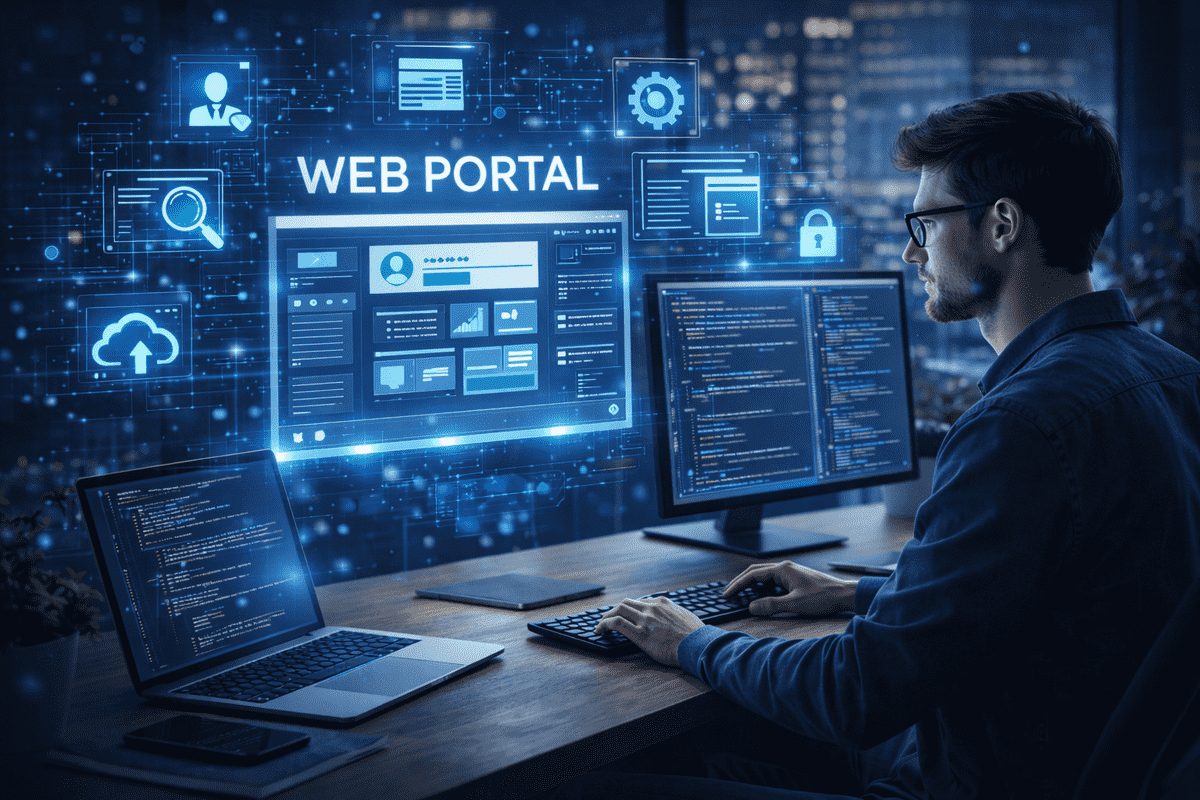
Web portal development is a powerful solution for businesses and organizations that need centralized, secure, and interactive platforms to manage information, users, and workflows. A web portal is more than a standard website. It is a dynamic system that allows different user roles to access personalized content, dashboards, and features through a single online interface.
In today’s digital-first environment, web portal development plays a critical role in improving communication, streamlining operations, and delivering tailored user experiences. From customer portals and employee intranets to vendor portals and enterprise dashboards, web portals help organizations operate more efficiently while maintaining high security and scalability.
What Is Web Portal Development?
Web portal development refers to the process of designing and building a web-based platform that aggregates information, tools, and services into a single, secure interface. Unlike traditional websites, web portals are interactive, data-driven, and often role-based.
A well-developed web portal allows users to log in, access personalized content, perform actions, and interact with systems or other users. Web portals are commonly used by businesses, educational institutions, healthcare organizations, and enterprises.
Core Characteristics of Web Portals
- User authentication and role-based access
- Personalized dashboards and content
- Secure data management
- Integration with internal and external systems
- Scalable and modular architecture
Businesses seeking advanced digital solutions often rely on professional web portal development services to ensure reliability and performance.
Why Web Portal Development Is Important for Businesses
As businesses grow, managing data, users, and workflows through disconnected systems becomes inefficient. Web portal development solves this problem by providing a centralized platform where users can access everything they need.
Web portals improve productivity, reduce manual work, and enhance user satisfaction by delivering relevant information in one place.
Key Benefits of Web Portal Development
- Centralized access to information and tools
- Improved communication and collaboration
- Enhanced data security and control
- Scalable infrastructure for growth
- Better user experience through personalization
Whether for internal teams or external users, web portals create operational efficiency and transparency.
Types of Web Portals
Web portal development can be customized for different audiences and purposes. Understanding the types of web portals helps define the right solution.
Customer Web Portals
Customer portals allow users to manage accounts, track orders, access support, and view personalized information.
- User account management
- Order and service tracking
- Support tickets and communication
Employee Portals (Intranets)
Employee portals centralize internal resources, documents, and communication.
- Internal announcements
- HR tools and documents
- Team collaboration features
Partner and Vendor Portals
These portals help manage relationships with suppliers, partners, and vendors.
- Data sharing and reporting
- Order and contract management
- Secure collaboration
Enterprise Web Portals
Enterprise portals integrate multiple systems into a single interface.
- Business intelligence dashboards
- Workflow automation
- System integrations
Each portal type requires a tailored approach, which is why professional development is essential.
The Web Portal Development Process
Successful web portal development follows a structured and strategic process.
1. Requirement Analysis
Understanding business goals, user roles, and functional requirements.
2. Architecture and Planning
Designing a scalable, secure, and modular system architecture.
3. UI/UX Design
Creating intuitive dashboards and navigation for different user roles.
4. Development
Building frontend and backend features using modern technologies.
5. Testing and Quality Assurance
Ensuring functionality, performance, and security.
6. Deployment and Maintenance
Launching the portal and providing ongoing updates and support.
Many organizations trust experienced development teams to manage this end-to-end process.
Key Features of a High-Quality Web Portal
Effective web portal development focuses on features that improve usability, security, and efficiency.
Essential Web Portal Features
- User authentication and role management
- Custom dashboards
- Data visualization and reports
- Search and filtering tools
- Notifications and alerts
- Integration with third-party systems
Advanced Web Portal Features
- Workflow automation
- Document management
- Real-time messaging
- API-based integrations
- Analytics and performance tracking
Choosing the right features ensures the portal delivers real business value.
Technologies Used in Web Portal Development
Modern web portal development relies on robust and scalable technologies.
Frontend Technologies
- HTML, CSS, JavaScript
- React, Angular, Vue.js
Backend Technologies
- Node.js
- Python
- Java
- PHP
Database and Infrastructure
- MySQL, PostgreSQL
- MongoDB
- Cloud hosting platforms
The right technology stack ensures performance, security, and scalability.
Security Considerations in Web Portal Development
Security is a top priority in web portal development because portals often handle sensitive data.
Security Best Practices
- Secure user authentication
- Role-based access control
- Data encryption
- Regular security audits
- Compliance with data protection standards
Strong security builds trust and protects both users and organizations.
SEO and Performance in Web Portal Development
While many web portals are private, public-facing portals still benefit from SEO-friendly development. Clean code, fast performance, and optimized structure improve visibility and usability.
- Fast loading pages
- Mobile-friendly design
- Clean and maintainable code
- Optimized assets
Performance optimization ensures smooth operation even as user numbers grow.
Why Choose Business Grow for Web Portal Development
Business Grow delivers reliable and scalable web portal development solutions tailored to business needs. Our team focuses on security, performance, and user experience to build portals that support long-term growth.
- Custom web portal solutions
- Secure and scalable architecture
- Modern UI/UX design
- Ongoing support and optimization
We help businesses transform complex processes into efficient digital platforms.
Our Flexible Pricing
Search Engine optimization Service
❇️ Starter Plan ❇️
$399/Per Month
- UpTo 15 Keywords Targeted
- Basic On-Page Optimization
- Basic Technical SEO
- 1 Blog Topic / Month
❇️ Bronze ❇️
$599 Per Month
- UpTo 30 Keywords Targeted
- Strong On-Page Optimization
- Fix Technical SEO
- 2 Blog Topic / Month
❇️ Golden Plan ❇️
$799/Per Month
- UpTo 50 – 100 Keywords Targeted
- Full Advanced On-Page Optimization
- Full Site Audit + Indexing Optimization
- Full Content Calendar + Blog Guidance
Design and Development Service
❇️ Basic Plan ❇️
$99/One Time
- 1-Page Website Design
- Fully Mobile Responsive
- 3 Revisions
- Contact/Query Form
- Security Protocol
- Dedicated Project Manager
- 24/7 Customer Support
❇️ Standard Plan ❇️
$449 One Time
- 1-5 Page Website
- Fully Mobile Responsive
- Unlimited Revisions
- SEO Optimzied
- SEO Optimzied
- CMS-Based (WordPress)
- Contact/Query Form
- Online Booking System
- Security Protocol
- 24/7 Customer Support
❇️ Premium Plan ❇️
$649/One Time
- 5-10 Page Website
- Mobile & Tablet Friendly
- Unlimited Revisions
- SEO Optimzied
- CMS-Based (WordPress)
- Contact/Query Form
- Online Booking System
- Security Protocol
- Complete Deployment
- Quarterly Website Performance Report
- Cross Browser Compatible
- Speed Optimized
- 24/7 Customer Support
Brand Design Service
❇️ Basic Plan ❇️
$79/One Time
- Custom Logo Design
- Design Variations
- Business Card Design
- 24/7 Customer Support
❇️ Premium Plan ❇️
$135 One Time
- Custom Logo Design
- Vector File
- Design Variations
- Business Card Design
- Letterhead Design
❇️ Elite Plan ❇️
$199/One Time
- Custom Logo Design
- Vector File
- Design Variations
- Source File
- Brand Style Guide
- Business Card Design
- Letterhead Design
- Social Media Asset Design
- 24/7 Customer Support
Digital marketing Service
❇️ Basic Plan ❇️
$499/Per Month
- Recommended $1,000 Ad Spend/month
- Search Camapaign + Call Only
- (1–2) Campaigns Managed
- 50 Keywords Research & Setup
❇️ Standard ❇️
$699 Per Month
- Recommended $1,000 – $5,000 Ad Spend/month
- Search + Call Remarketing/Performance Max
- (Up to 5) Campaigns Managed
- 100 Keywords Research & Setup
- 3 A/B Variants + Extensions
❇️ Elite Plan ❇️
$199/One Time
- Recommended $5,000+ Ad Spend/month
- Unlimited Campaigns Types
- (UpTo 10) Campaigns Managed
- Unmlimited Keywords & Competitor Analysis
- Advanced Conversion Tracking
Frequently Asked Questions About Web Portal Development
What is web portal development?
Web portal development is the process of building a centralized, interactive platform that provides personalized access to information and tools.
How is a web portal different from a website?
A web portal is interactive and role-based, while a website is usually informational.
Are web portals secure?
Yes, when built with proper security practices.
Can web portals integrate with other systems?
Yes, integrations are a core feature.
Are web portals scalable?
Yes, they are designed to support growth.
Do web portals support mobile users?
Yes, responsive design ensures mobile compatibility.
How long does web portal development take?
Timelines depend on complexity and features.
Can existing systems be converted into a web portal?
Yes, legacy systems can be modernized.
What industries use web portals?
Healthcare, education, finance, and enterprises commonly use portals.
Is maintenance required?
Yes, ongoing updates and monitoring are important.
Do web portals support analytics?
Yes, analytics and reporting are often included.
Can web portals automate workflows?
Yes, automation is a key advantage.
Are custom web portals expensive?
Costs vary, but they offer strong long-term ROI.
Can portals support multiple user roles?
Yes, role-based access is standard.
Is web portal development future-proof?
Yes, modern portals are built to evolve with technology.